
Designs That Speak in Colour: Celebrating Visionaries of Space at the Creative Colour Awards
In the world of spatial design, colour is both a muse and a medium that can shape our perception of space, evoke emotions and tell stories. The theory of spatial design focuses on the entire experience of the built environment – how the structures and interiors can affect how people move and interact within spaces.
In the hands of a thoughtful designer, colour becomes functional and driven with a purpose. It can transform a cold expanse into a place of warmth, or enlarge a space to increase feelings of comfort. A muted palette can calm the soul; a bold splash of vermilion can provoke thought or stir joy.
It is this transformative essence of colour that Nippon Paint seeks to honour through the Creative Colour Awards (CCA) 2025, a global celebration of expression and purpose in spatial design. Now in its third year, CCA continues to spotlight architects and interior designers who dare to dream in colour and understand that the right palette has the power to shape how we live, feel, and connect.
Rooted in Nippon Paint’s unwavering vision to elevate the role of colour in architecture and interior design, CCA stands as a tribute to the creative, innovative, and purposeful use of colour and coatings in shaping meaningful spaces. CCA seeks to spotlight standout talents in the field and connect them to other global industry leaders, fostering a vibrant community that values colour not only as a visual medium but as a vehicle for cultural storytelling and human connection. This year, CCA received 188 submissions from across 10 countries and regions, demonstrating how colour can transcend borders and transform the built environment with purpose and imagination.
Free for all to enter, interior and exterior paint finishes of any projects that span public spaces or indoor environments are judged based on colour delivery, involvement of colour in the design process, the social or environmental integration, and the visual impact of the storytelling.
At the grand finale of the Creative Colour Awards (CCA) 2025 held in Tokyo, Japan, Murali Architects Chennai, India stood out with their project GB School and won the Grand Prix award, walking away with a USD5,000 prize. GB School is an international school in the small town of Melmaruvathur, India, providing free education to children of all ages from underprivileged and diverse backgrounds. The project uses a carefully curated colour palette to create an inspiring and conducive learning environment, with bright yellows and red in common and play areas to energise and spark creativity, while calming blues and greens in the classrooms promote focus and concentration.
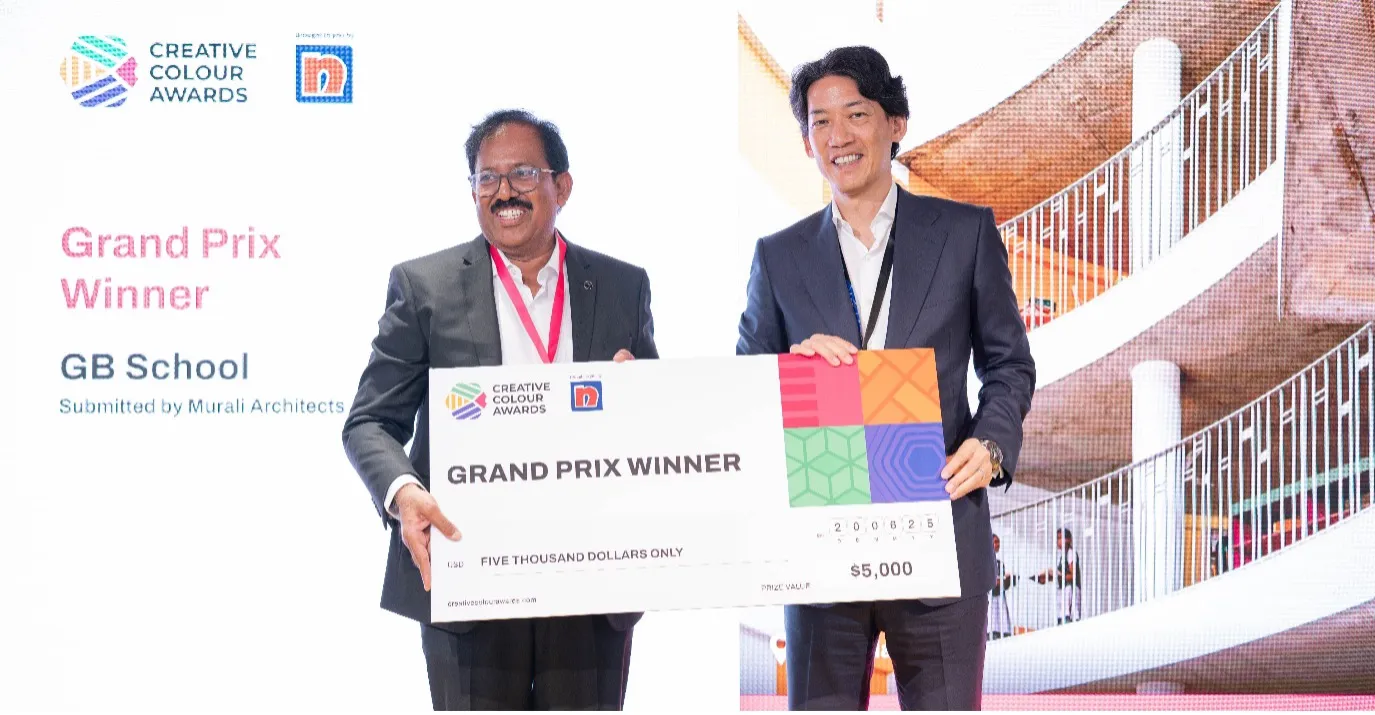
“We wanted to create a unique and welcoming learning environment, from the vibrant red entry foyer that celebrates childhood and vitality, to the cultural patterns woven into the floor tiles that evoke a sense of community and belonging,” said Murugan Murali from Murali Architects. “It is an honour to represent India at the Creative Colour Awards 2025 and share our vision on the global stage. I am grateful to Nippon Paint for providing a platform that recognises creativity, innovation, and the transformative power of colour.”
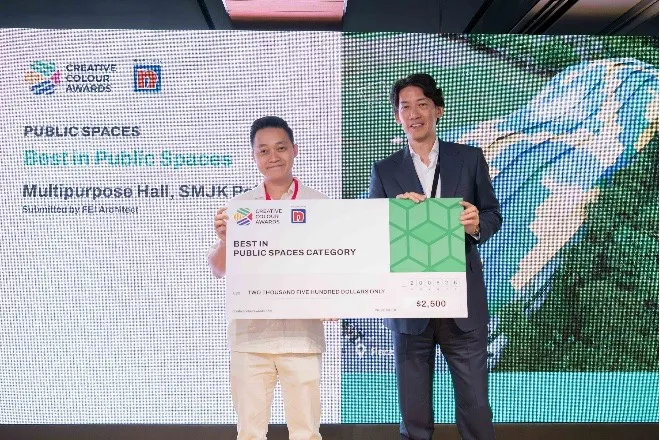
Architects and interior designers across all categories continued to push boundaries of creativity, showcasing how colour can be an integral force driving design. FEI Architect from Malaysia similarly brought colour and joy to students with their Multipurpose Hall in SMJK Poi Lam, earning them the Best in Public Spaces award. The hall’s curving and overlapping non-conventional roof design allows bright hues inspired by the school’s sports house colours and shifting reflections of light to animate the space, evoking a sense of energy and movement for the children.
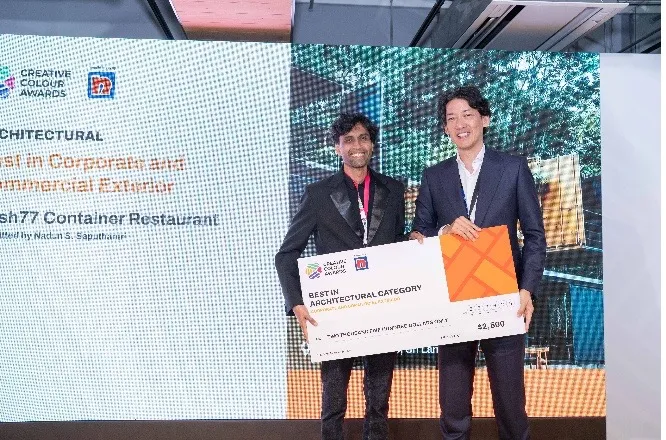
Mak Arkitek Konsult, also from Malaysia, took home the Architectural Best in Residential Exterior Award for V21 Residence @ KKIP. The firm used strategic colour selection and play to give affordable housing a sense of depth while balancing functionality and sophistication, demonstrating their belief that meaningful architecture should be accessible to all. Nadun S. Saputhantri from Sri Lanka bagged the Architectural Best In Corporate And Commercial Exterior award for the Nosh77 Container Restaurant, integrating a palette of grey-green and brown-orange hues with recycled construction materials to camouflage the building with the surrounding vegetation and create harmony with nature.
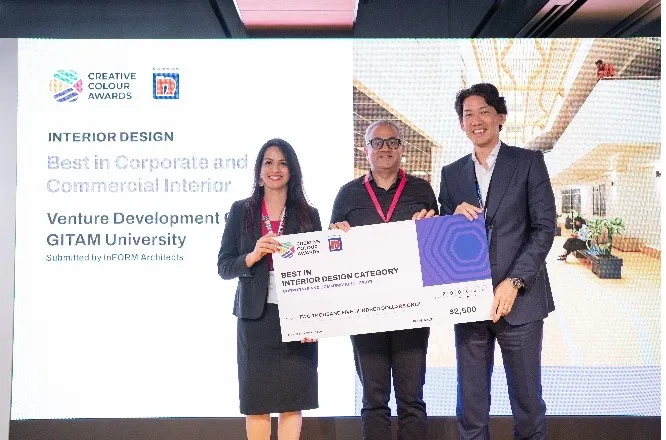
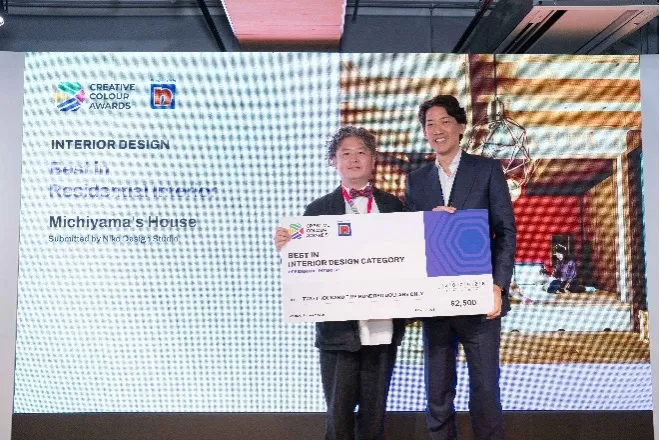
InFORM Architects was honoured with the Interior Design Best In Corporate And Commercial Interior award for their Venture Development Centre, GITAM University in India. With the goal of creating a vibrant and energetic space that serves as a hub for innovation, collaboration and entrepreneurial growth, InFORM Architects reimagined a previously underutilised space by using strategic spatial design and a bold, dynamic colour to open up the flow of the space and add visual connectivity. Meanwhile, two-time winner Niko Design Studio once again impressed judges with Michiyama’s House, winning the Interior Design Best in Residential Interior award. The home artfully uses colour to define interior boundaries and stands out for involving the family’s children in the creative process, inviting them to leave their own mark through hands-on artistic expression.

Honouring the Universal Language of Colours
At its heart, CCA is a reflection of Nippon Paint’s belief in the influence colour wields in shaping environments, evoking emotion and enhancing the quality of life for communities. Through this initiative, Nippon Paint affirms its steadfast commitment to elevating colour beyond decoration, redefining it as an essential element in purposeful and sustainable design.
Nippon Paint further embodies this belief through their Colouring Lives social responsibility initiative, where they reinvigorated a popular tourist destination in Pakistan by working together with locals to paint eco-friendly murals across the town of Changla Gali. In Vietnam, Nippon Paint partnered with the Hope Foundation on the School Light Project to paint and rebuild 10 schools across four provinces, breathing a new coat of hope into better and improved learning environments for the students.
“More than just a celebration of aesthetic brilliance, CCA seeks to highlight the homegrown architects and designers who harness the transformative potential of colour through coatings to breathe life and soul into spaces. We want to provide a platform for industry professionals to experiment and innovate, and continue tapping into their creativity to create environments that benefit communities. We would like to congratulate this year’s winners for delivering thoughtful and impactful designs that balance beauty and sustainability,” said Mark Titus, Vice President of Marketing for Nippon Paint India and Group Marketing Lead for The NIPSEA Group.
“As a first-time jury member, I was truly impressed by the creativity and passion on display. What stood out to me was how colour continues to serve as a compelling design language, delivering not just visual impact but also functioning as a powerful medium for storytelling and emotional resonance,” said Hiroko Machida, Principal of Hiroko Academy and jury of CCA 2025. “This year’s participants truly exemplified the heart of what CCA stands for, which is that design can be both beautiful, purposeful, and deeply human, all at the same time.”
Francesca Heathcote Sapey, Partner, Teresa Sapey + Partners, and returning jury commented, “It has been rewarding to see how CCA continues to gain recognition within the design community, evolving into a celebrated space where the language of colour takes centre stage. The platform has become an impressive showcase of how colour can influence perception and evoke emotion, especially when used with intention to enhance both concept and experience.”
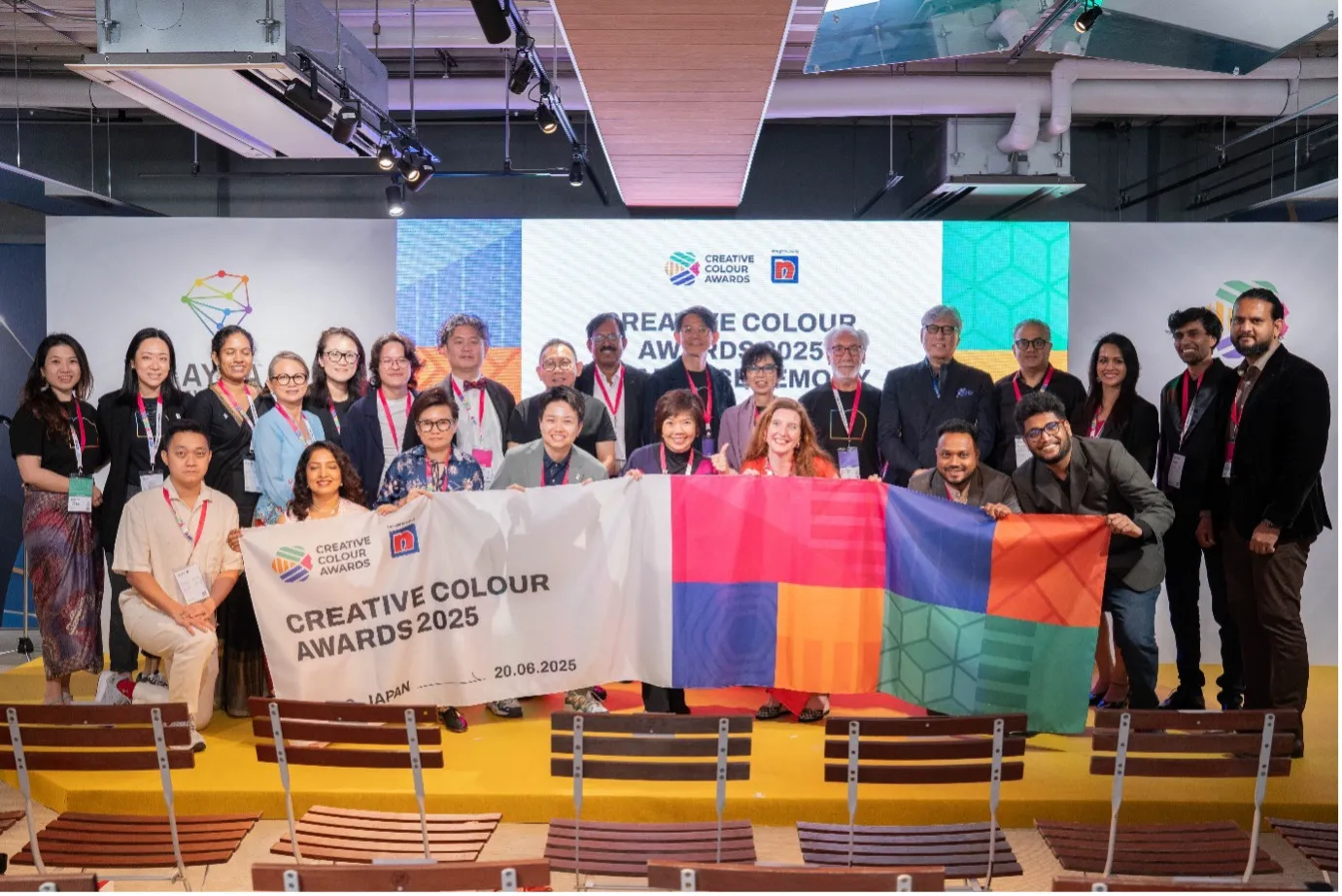
The awards ceremony was held in tandem with the AYDA Awards finale, a flagship event in the world of architecture and interior design that champions the brightest emerging talents. Since its inception, AYDA has welcomed more than 67,000 entries from over 1,600 tertiary institutions across 20 countries and regions, establishing itself as a beacon for future-forward design.