The crimson echo of the harvest finds life at the edges of the structure.
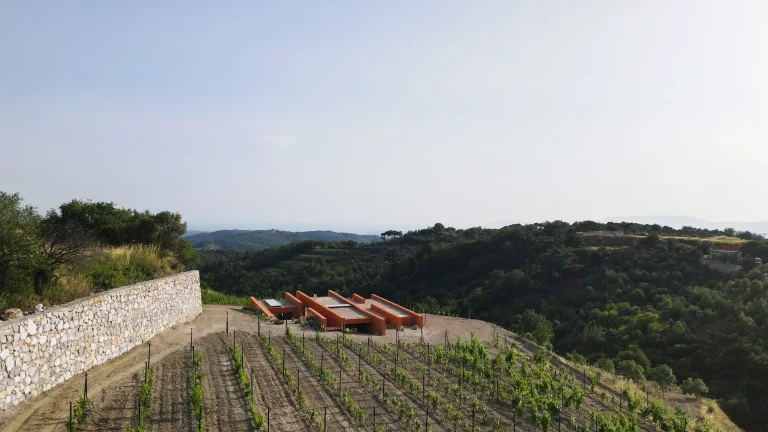
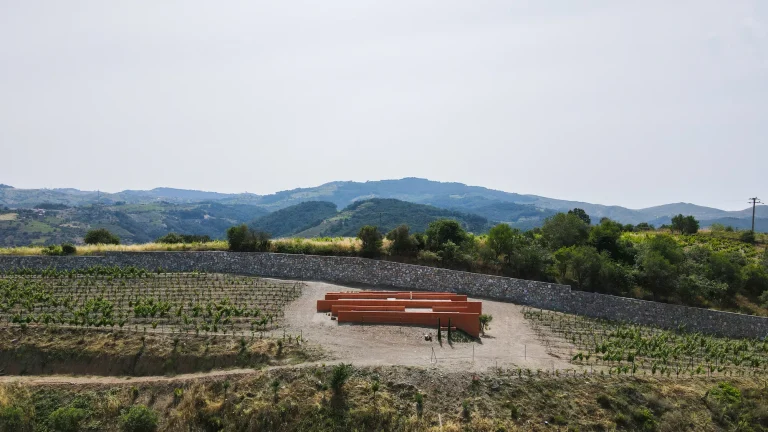
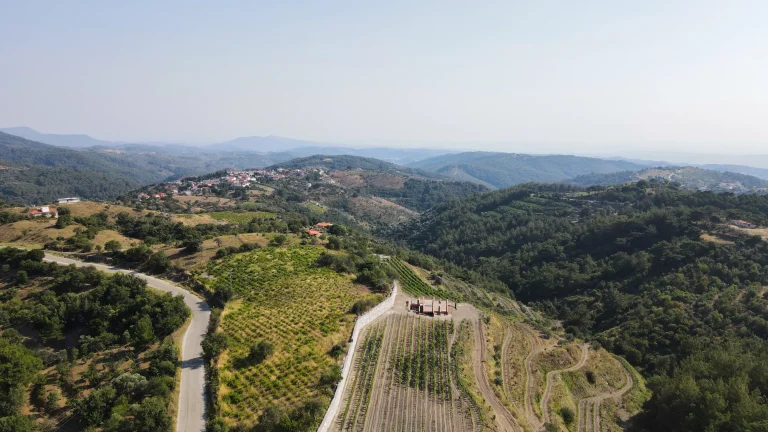
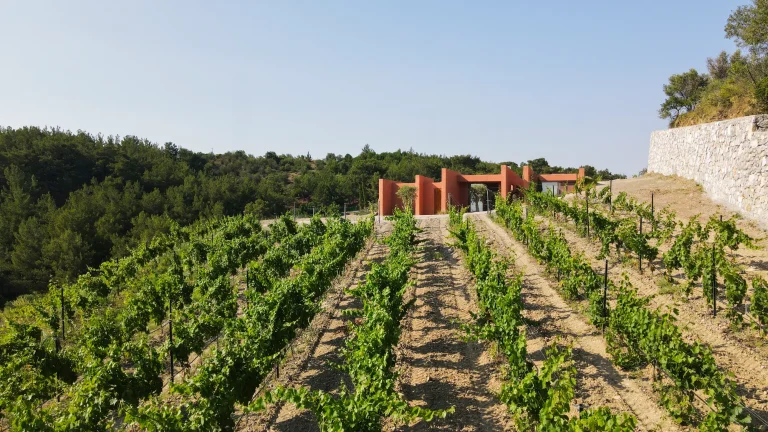
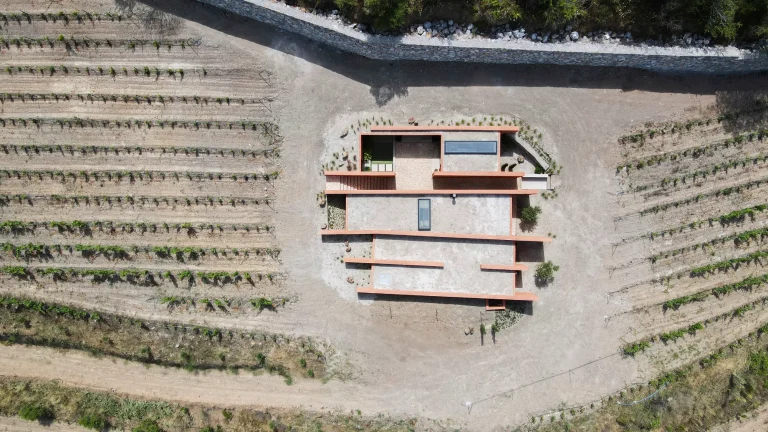
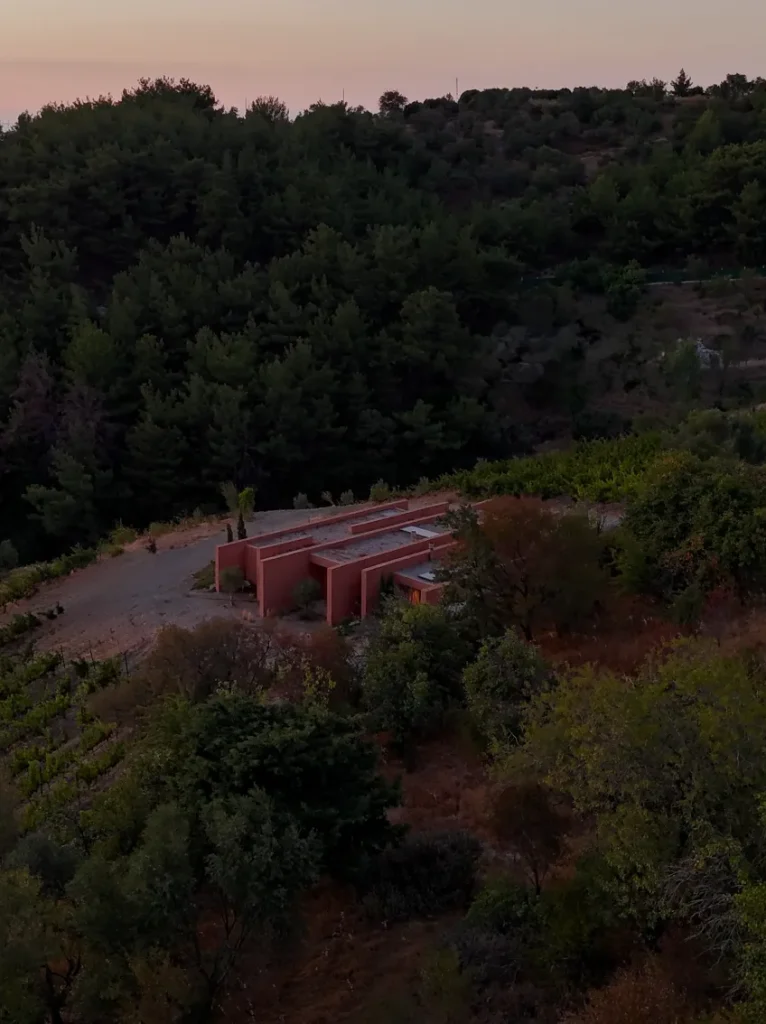
Rubrum Office is situated within a vineyard and olive grove in Seferihisar, Izmir—a region characterized by fertile soils suitable for wine production and a strong Mediterranean geography. The natural and agricultural context of the site plays a fundamental role in shaping the architectural concept. Rather than being treated as a backdrop, the vineyard itself becomes the primary design driver. The linear alignment of the grapevines, carefully organized to maximize productivity and oriented in response to prevailing winds, establishes a spatial logic that directly informs the form, orientation, and rhythm of the structure.
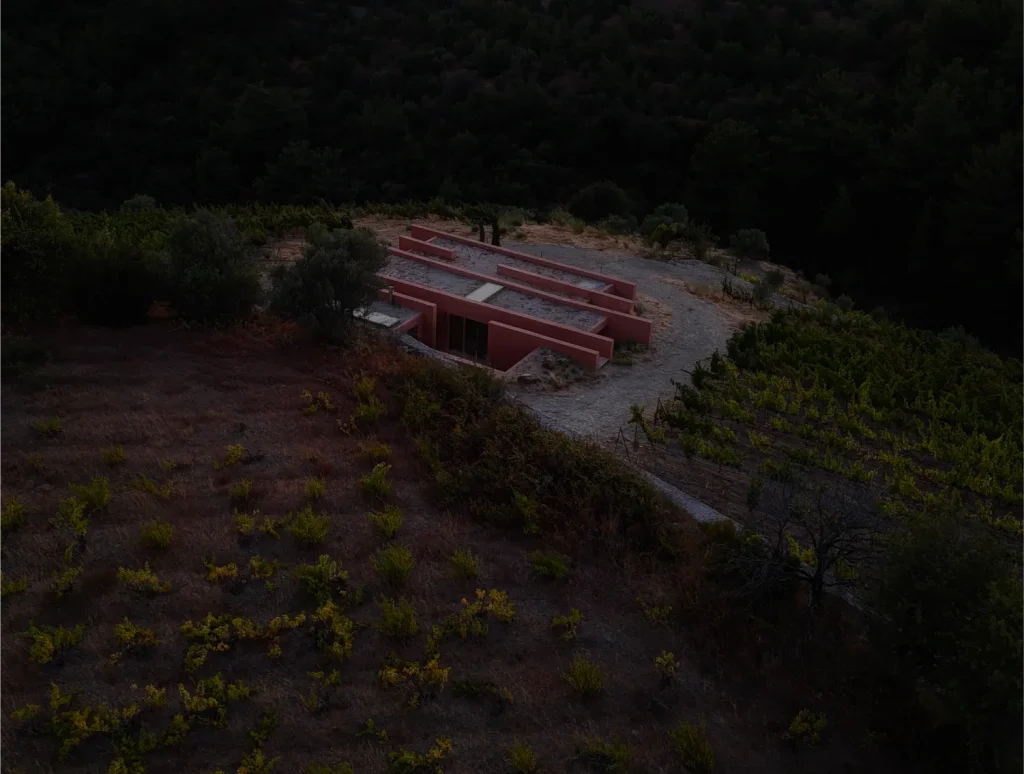
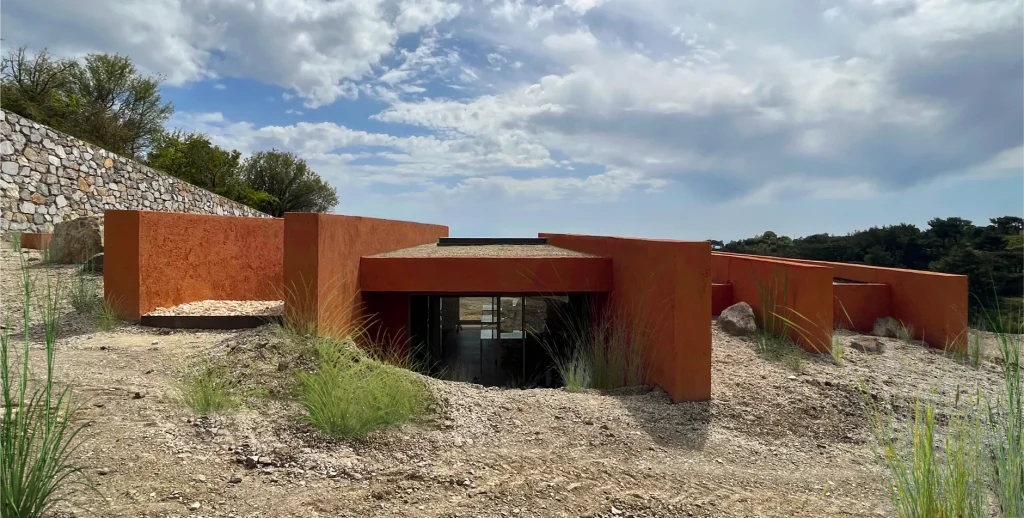
The architectural approach seeks to create a space that integrates seamlessly into the dynamic flow of the vineyard. The building is delicately embedded into the natural terrain, allowing it to merge with the topography while minimizing its visual footprint. From certain viewpoints, the structure dissolves into the axes of the vine rows, appearing as a concealed extension of the land. From others, it emerges as a strong vertical presence, defined by its solid and emphasized walls. This dual reading—between concealment and monumentality—forms a central theme of the project.
Located in Istanbul, Türkiye
Office İstanbul Architects
Finalists 2026
Colour Codes
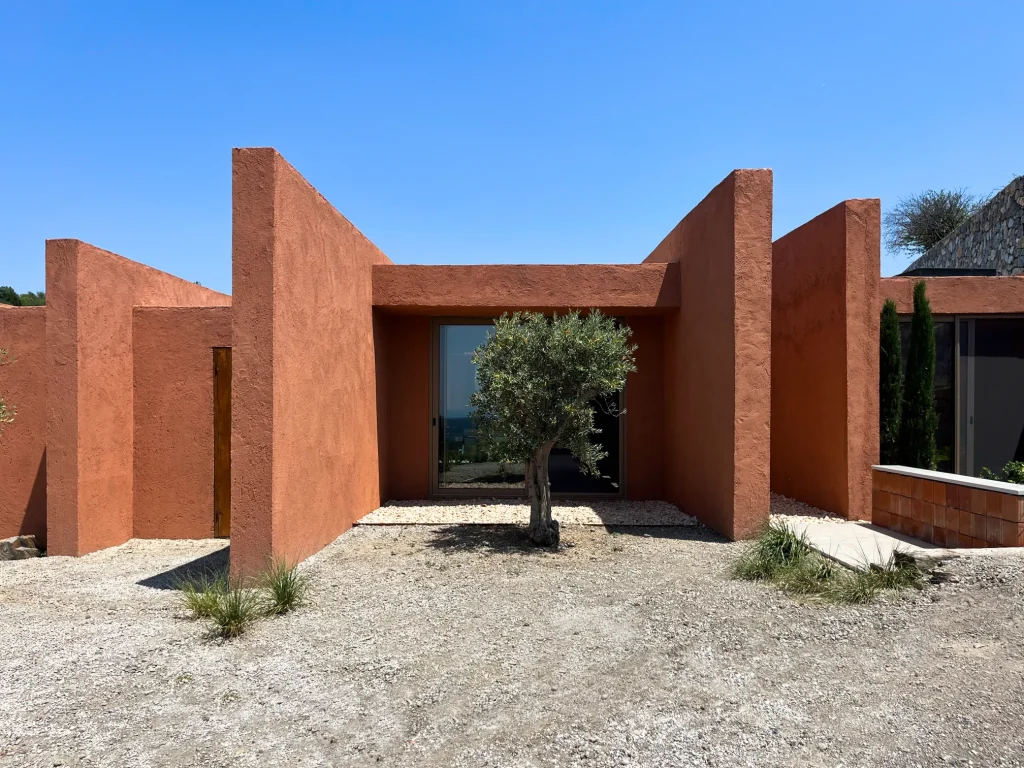
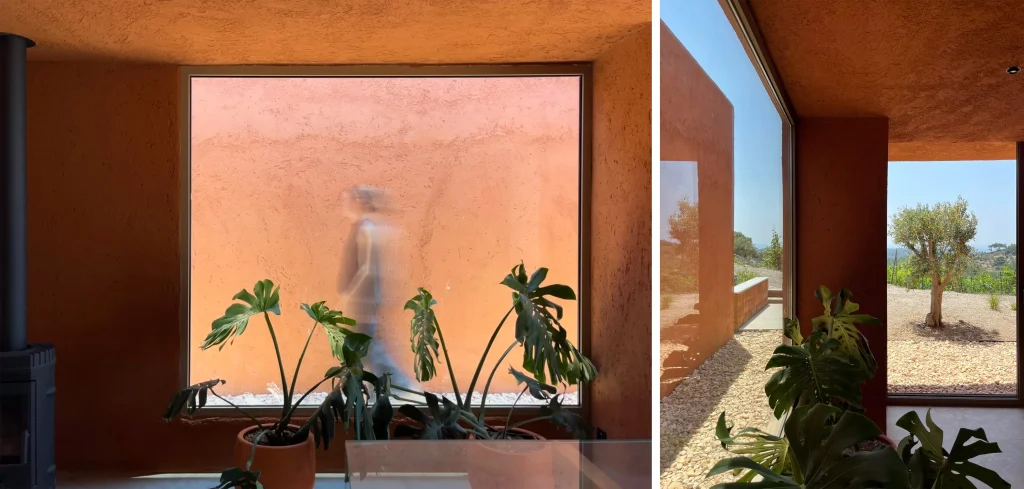
The primary material of the structure is a colored, earth-based mineral plaster, finished with the application of primer and paint. This layered surface treatment enhances durability and tonal consistency while preserving the material’s intrinsic relationship with the surrounding soil. Derived from the chromatic qualities of the land itself, the material reinforces the idea of cultivation, nurturing, and growth embedded in the vineyard landscape. Over time, the surface is intended to respond subtly to light, climate, and weathering, allowing the building to age as part of its environment.
Approaching the building is guided by a sequence of walls that gradually lead visitors inward. These walls choreograph movement and frame views of the surrounding landscape, directing users toward a central courtyard positioned at the heart of the structure. Designed as a sheltered and semi-open space, the courtyard accommodates functions such as reception, gathering, and spatial distribution. It provides protection from harsh climatic conditions while enabling fluid circulation between the surrounding spaces. More than a functional void, the courtyard operates as the architectural and symbolic core of the project. Through its spatial organization and earthen or stone flooring, the courtyard reinterprets the traditional “Life” spaces of historic Aegean houses, translating a familiar typology into a contemporary architectural language rooted in place, memory, and continuity.
Rubrum Winery Office
The architectural approach seeks to create a space that integrates seamlessly into the dynamic flow of the vineyard.
The crimson echo of the harvest finds life at the edges of the structure.