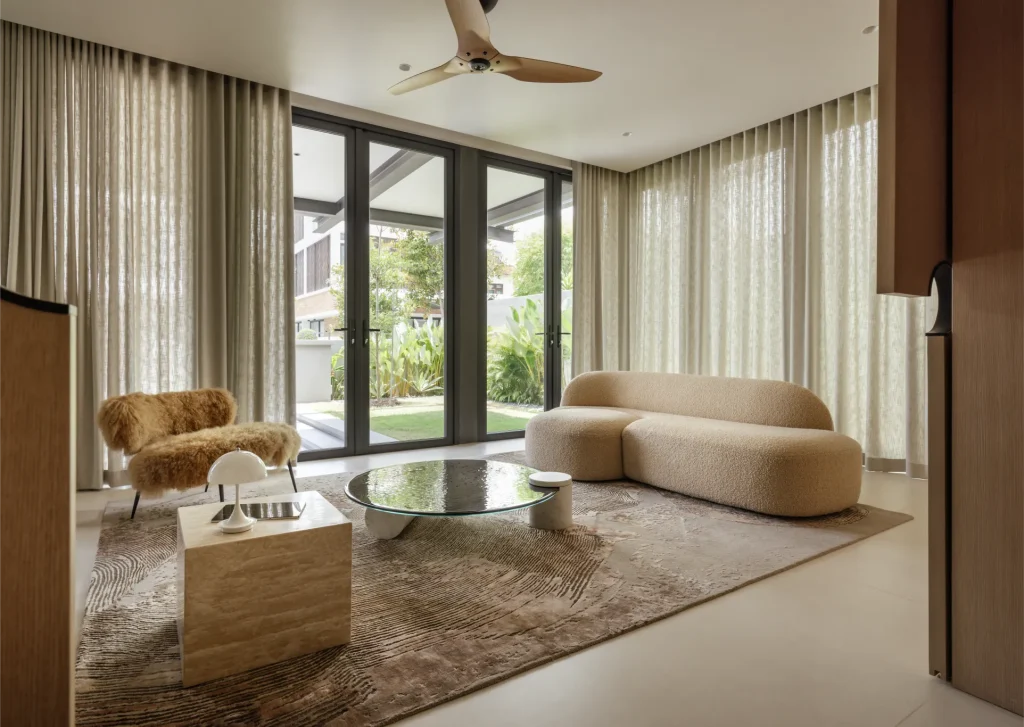
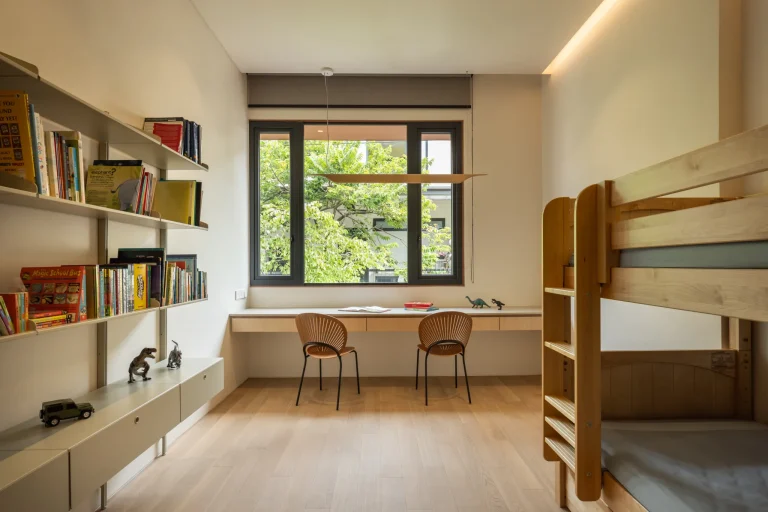
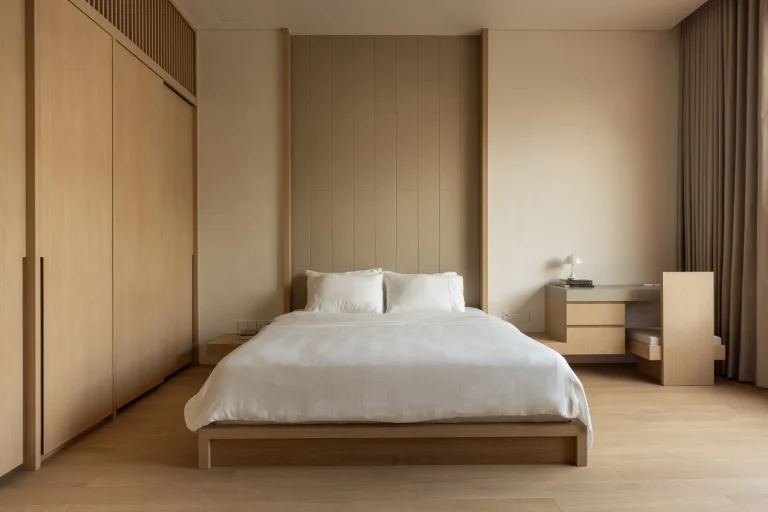
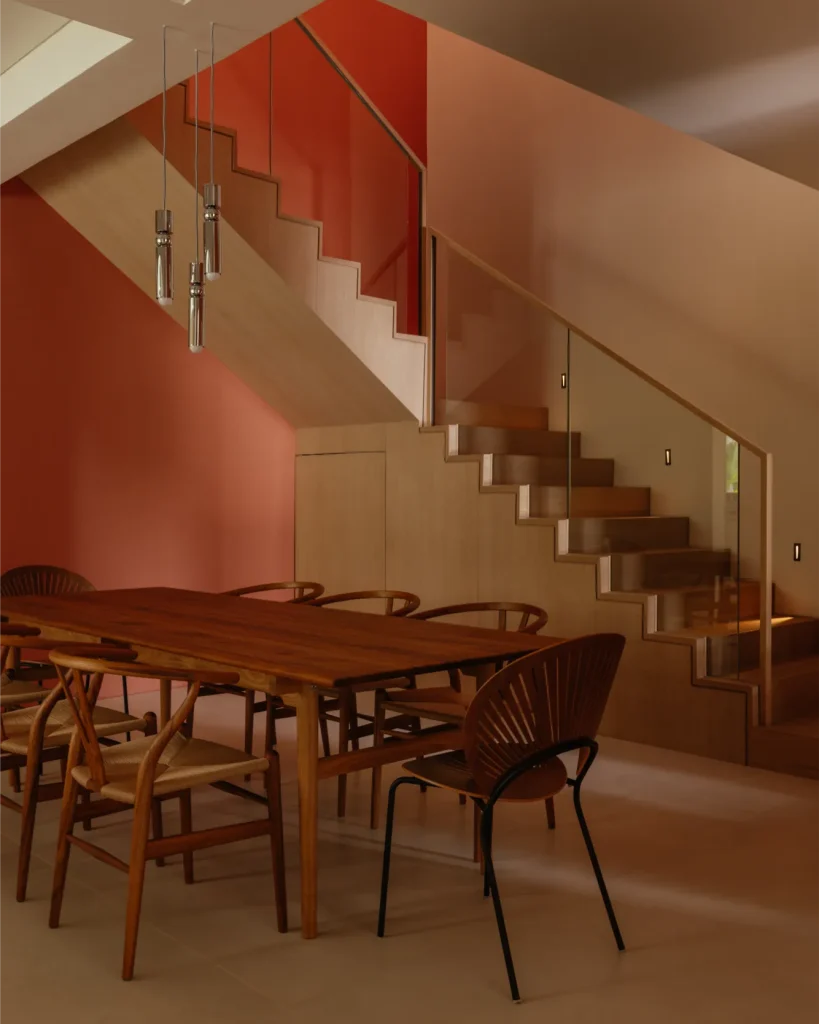
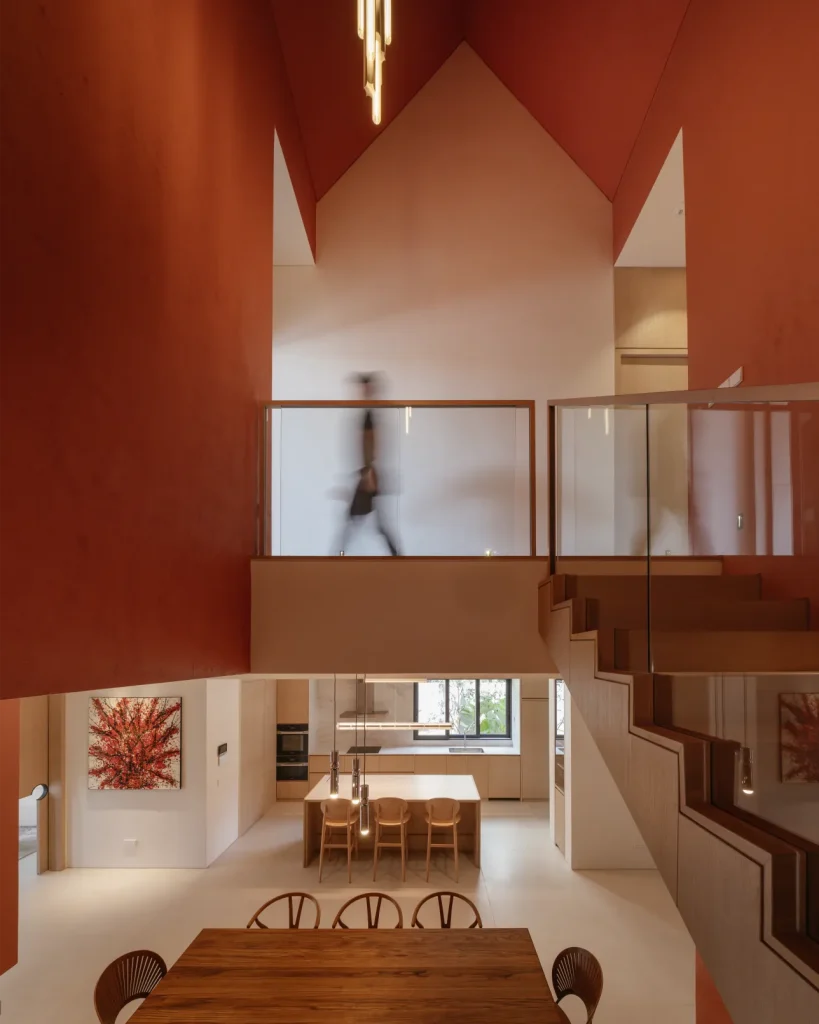
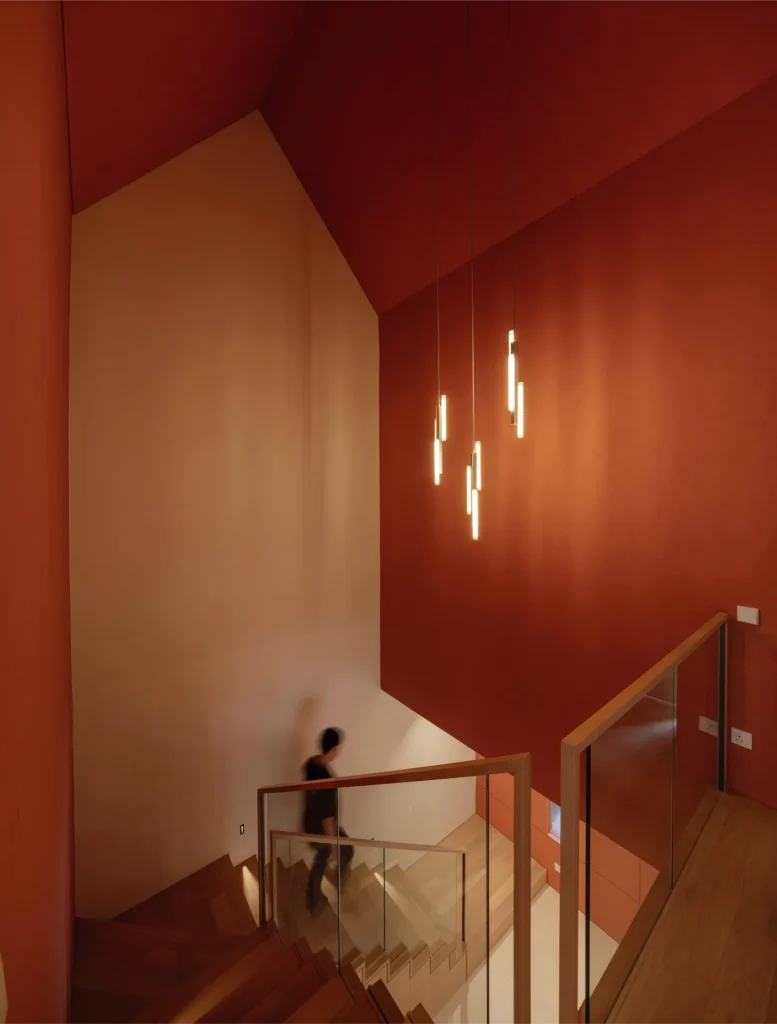
In this project, colour was used as an architectural device to define the spatial and emotional core of the home. A terracotta-red stairwell void anchors the house vertically, intensifying the chapel-like proportions and transforming functional circulation into a emotional height. Set against a neutral palette that allows daylight and greenery to dominate the living areas, the red volume establishes hierarchy and orientation — elevating colour to a device that shapes movement, perception and the experience of domestic space.
Background: Matou House is an additions and alterations project for an existing semi-detached residence in Singapore. Rather than demolish and rebuild, the project explores how a home can be renewed through careful spatial editing and the introduction of a new architectural layer. A lightweight steel extension wraps around the first storey of the original structure, expanding the living spaces toward the garden while retaining the core of the existing house. This approach preserves the memory of the original dwelling while allowing the house to support contemporary family life. The project demonstrates how strategic additions can transform an ordinary suburban house into a renewed architectural environment.
Located in Singapore
KAIZEN ARCHITECTURE
Finalists 2026, Winner 2026
Colour Codes
Concept: The design is anchored by the idea of wrapping. Instead of replacing the existing structure, a new layer of architecture embraces it, allowing the old and new to coexist in dialogue. This wrapping strategy expands the living spaces outward while keeping the original house legible. At the centre of the composition, the stairwell becomes a vertical void that connects the floors spatially and visually. Recognising its height and chapel-like proportions, the design transforms this space into the emotional centre of the home—an architectural moment that anchors movement, light and daily life.
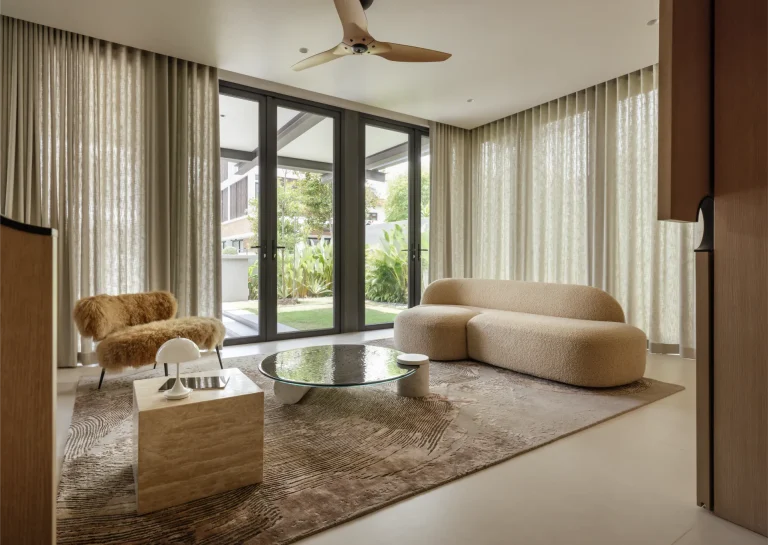
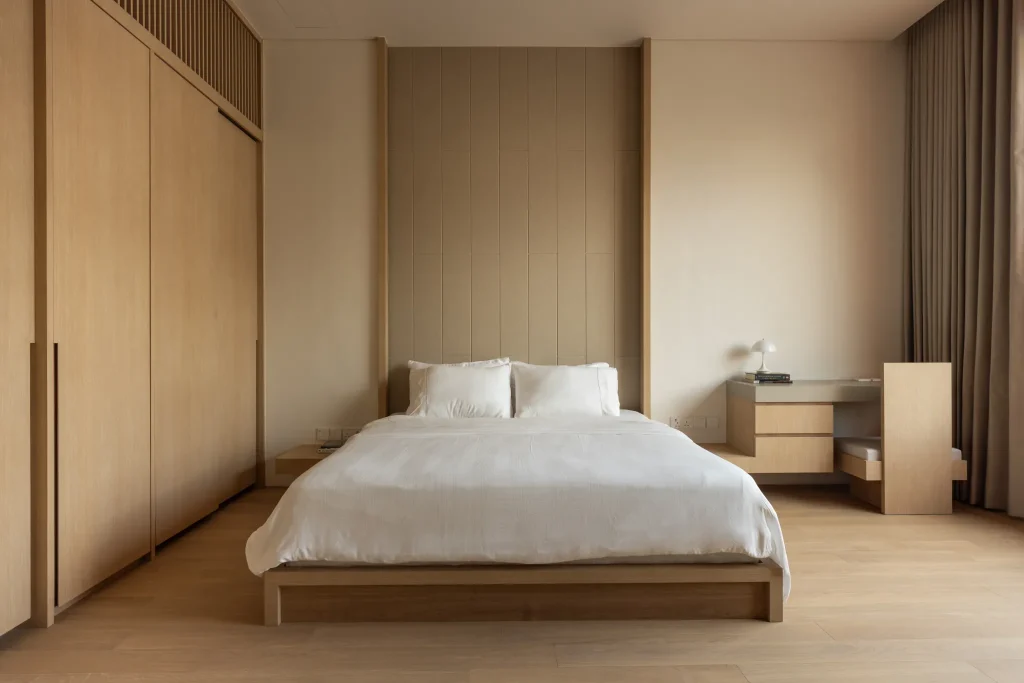
Color Story: Colour is used as a spatial device rather than a decorative gesture. The house is composed primarily in a calm, neutral palette that amplifies daylight and allows the surrounding greenery to become part of the interior experience. Within this restrained backdrop, the stairwell void is finished in terracotta red textured paint. The colour intensifies the vertical volume and distinguishes it as the heart of the house. The warm red surface heightens the sense of depth and enclosure, transforming an ordinary circulation space into a memorable architectural presence.
Matou House
In this project, colour was used as an architectural device to define the spatial and emotional core of the home.
Impact: The colour strategy reinforces spatial hierarchy within the house. The neutral palette creates a calm, luminous environment that supports everyday living, while the red stairwell void introduces contrast and focus. As residents move through the home, the colour draws attention to the vertical core, transforming circulation into a memorable spatial moment. The result is both functional and emotional: the house remains calm and comfortable for daily life, while the coloured void provides a sense of identity, orientation and architectural character. Colour therefore becomes a tool for shaping experience rather than simply aesthetic expression.
Colour is used as a spatial device rather than a decorative gesture. The house is composed primarily in a calm, neutral palette that amplifies daylight and allows the surrounding greenery to become part of the interior experience.