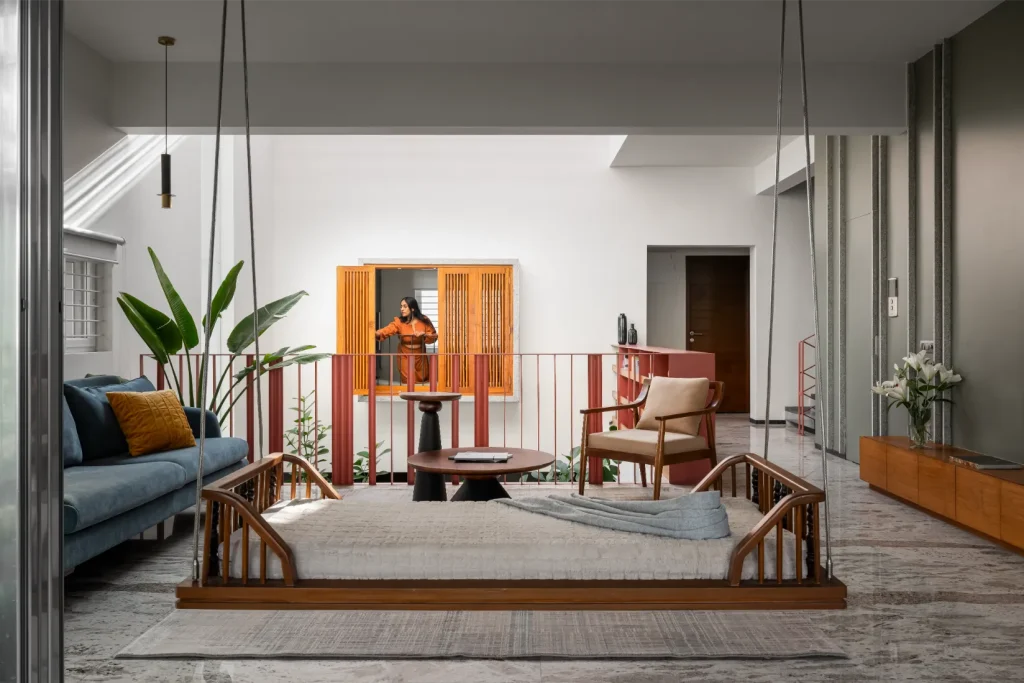
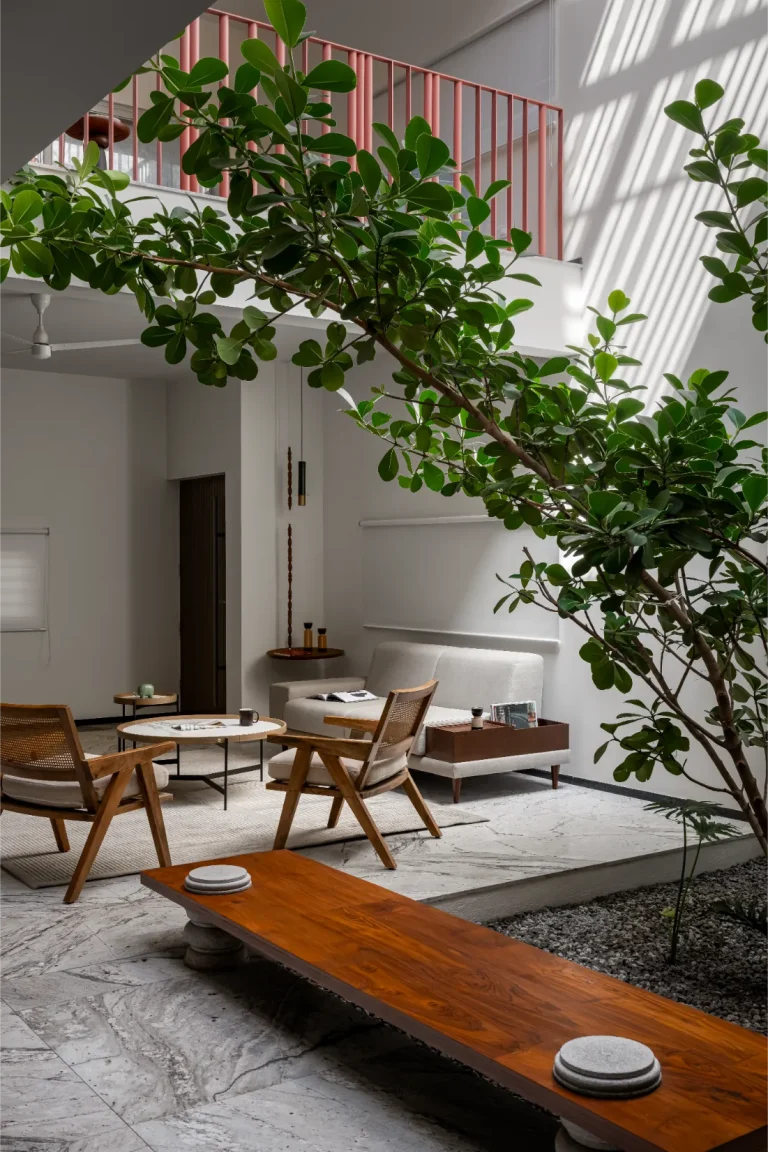
In this project, colours are used as a spatial device, carefully positioned to support the architectural experience rather than dominate it. White forms the primary canvas, amplifying natural light and enhancing the openness created by the central courtyard. Muted tones soften domestic spaces, bringing warmth and visual comfort. Strategic accents along elements like the staircase subtly guide movement, allowing natural materials, textures, and shifting daylight to remain the primary architectural experience.
Set within a dense residential neighbourhood in Bangalore, this house was designed for a family that has lived on the same site for decades and shares a strong connection with its surroundings. Unlike many contemporary urban homes that turn inward and isolate themselves from the street, the intention here was to retain a sense of openness and everyday interaction with the neighbourhood. The previous house struggled with excessive heat gain due to its west-facing orientation, making thermal comfort a key concern in the new design. The rebuilt home therefore incorporates passive strategies such as a stone screen façade that filters the harsh western sun while maintaining visual permeability. Earth block walls further enhance the thermal performance of the structure. At the heart of the planning lies a central courtyard that organizes the house vertically and horizontally, bringing daylight and ventilation into the interiors while acting as a shared social space for the three generations living within the home.
Located in Bangalore, India
Kamat and Rozario Architecture
Finalists 2026
Colour Codes
The design balances independence and connection for a multi-generational family. The ground floor accommodates the first generation, with their bedroom facing the street so that daily interactions with neighbours remain part of their routine. The upper levels house the second and third generations, each with private spaces while remaining visually connected through the courtyard void. This central space becomes the environmental and social core of the house, allowing family members to remain aware of one another’s presence across floors. The top floor hosts a work-from-home studio referred to as the “Human Den,” offering a quieter and more introspective environment. Materials from the earlier house were repurposed wherever possible, allowing fragments of memory to remain embedded within the new home.
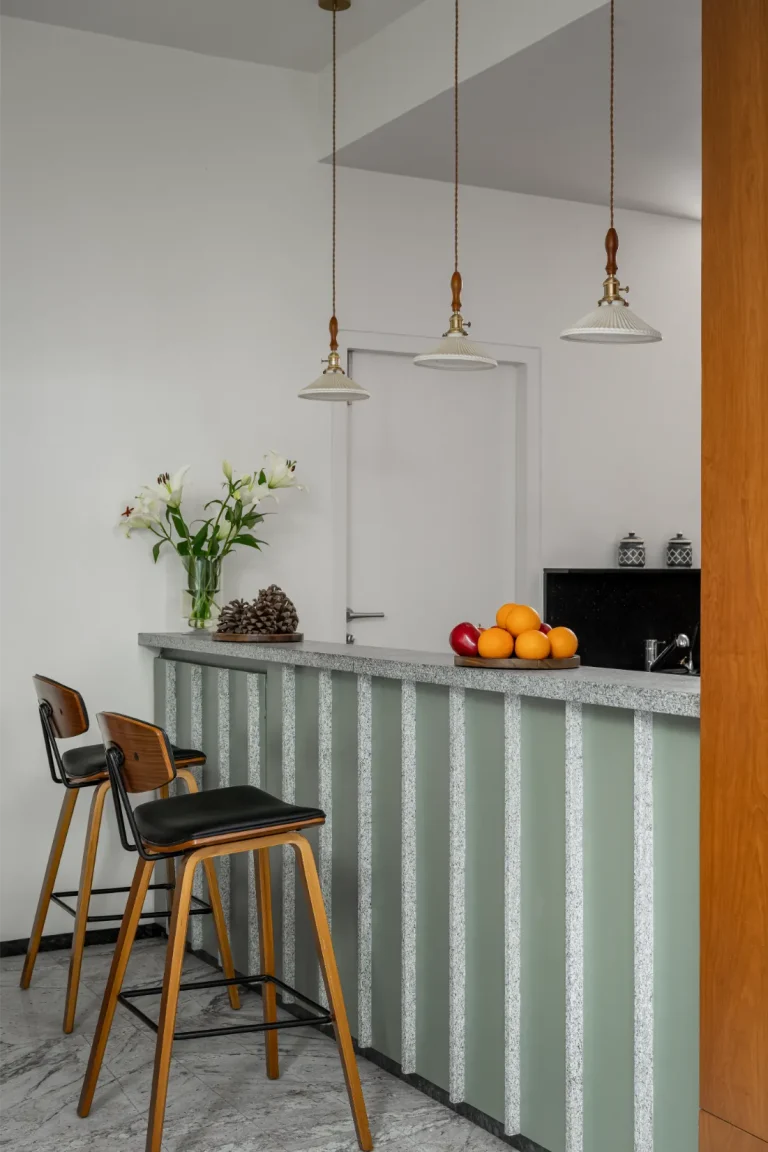
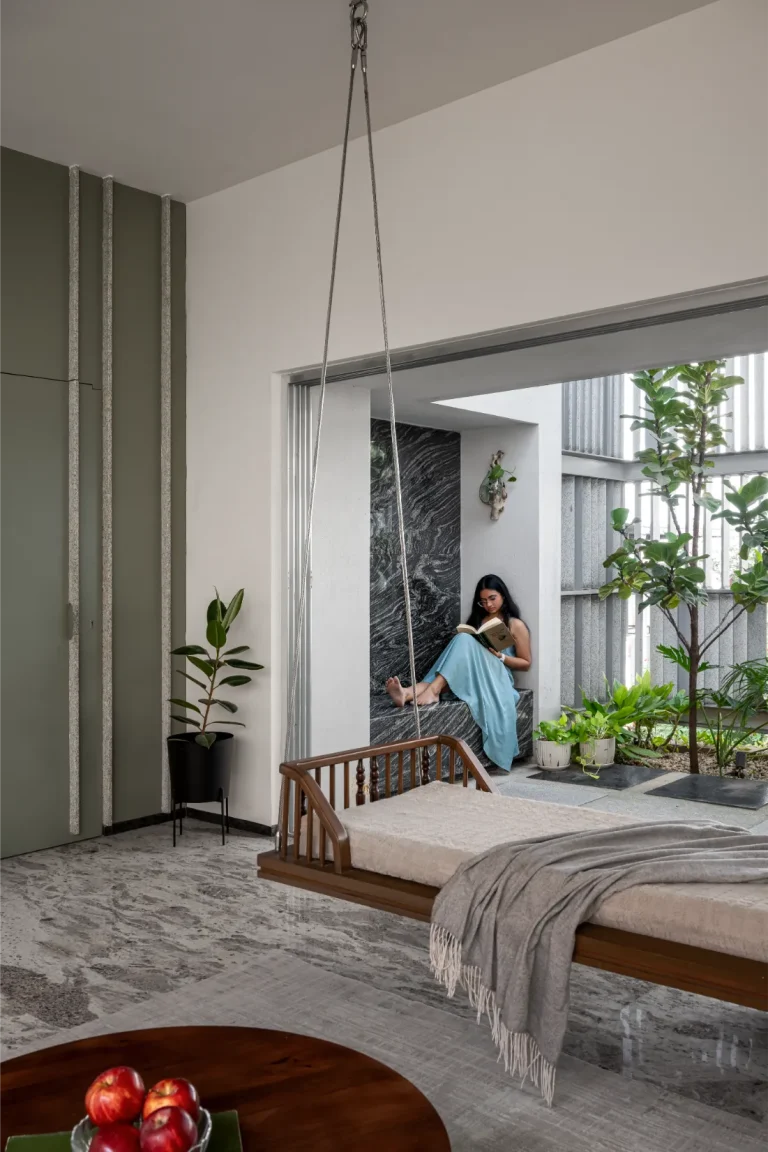
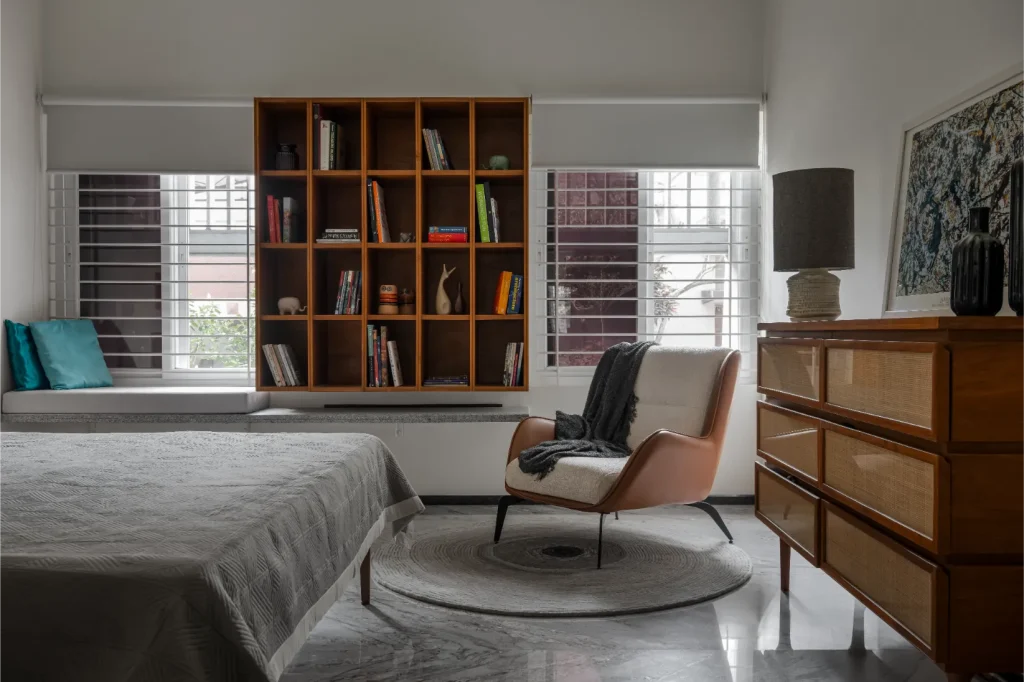
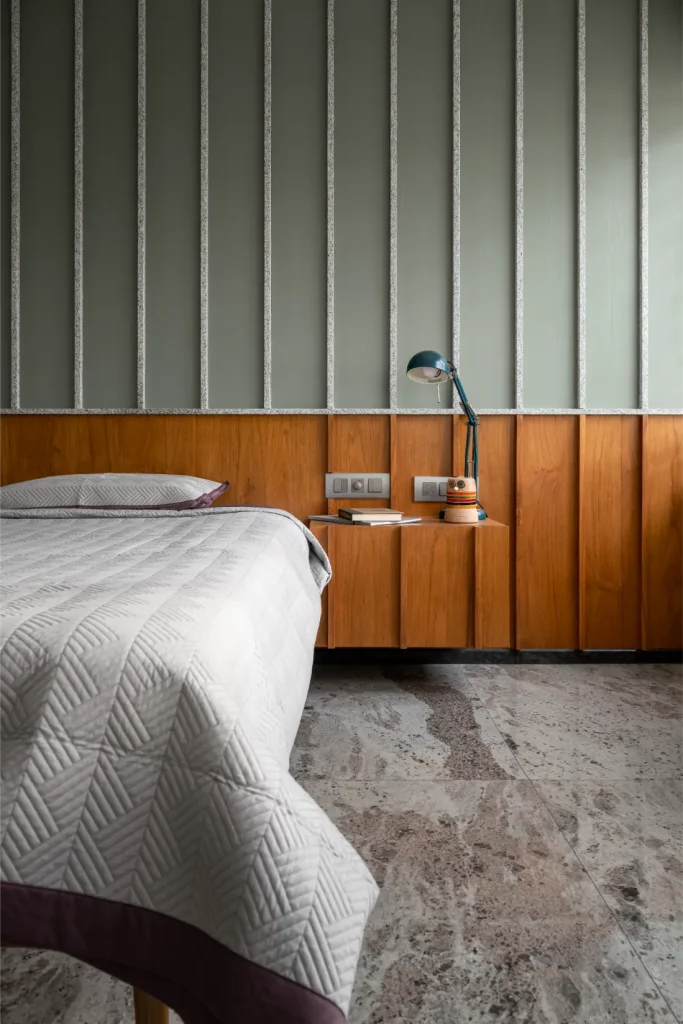
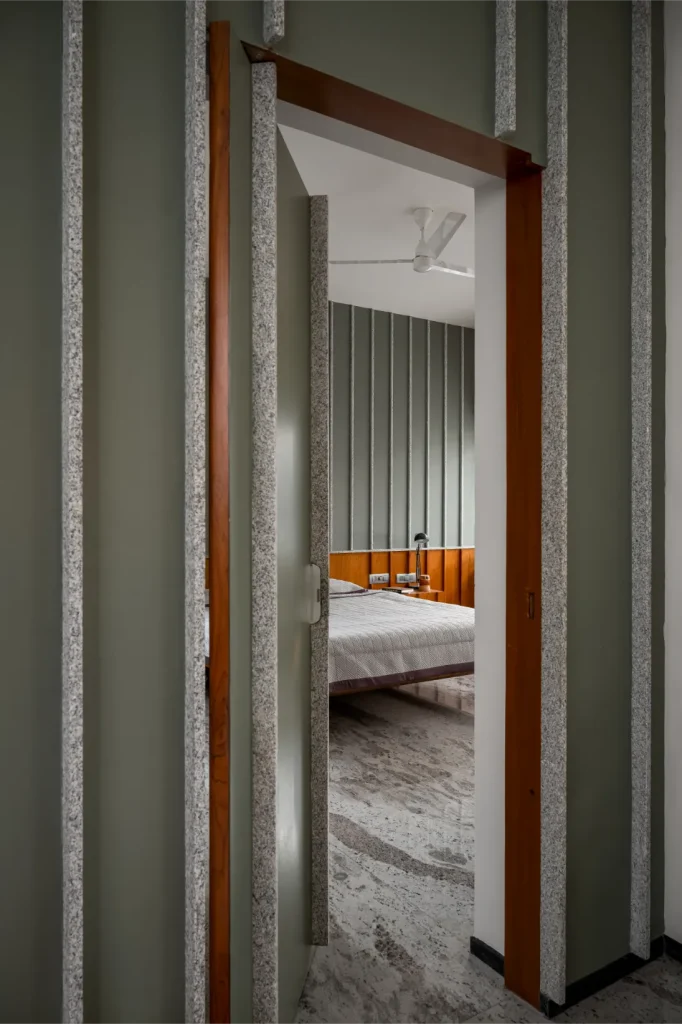
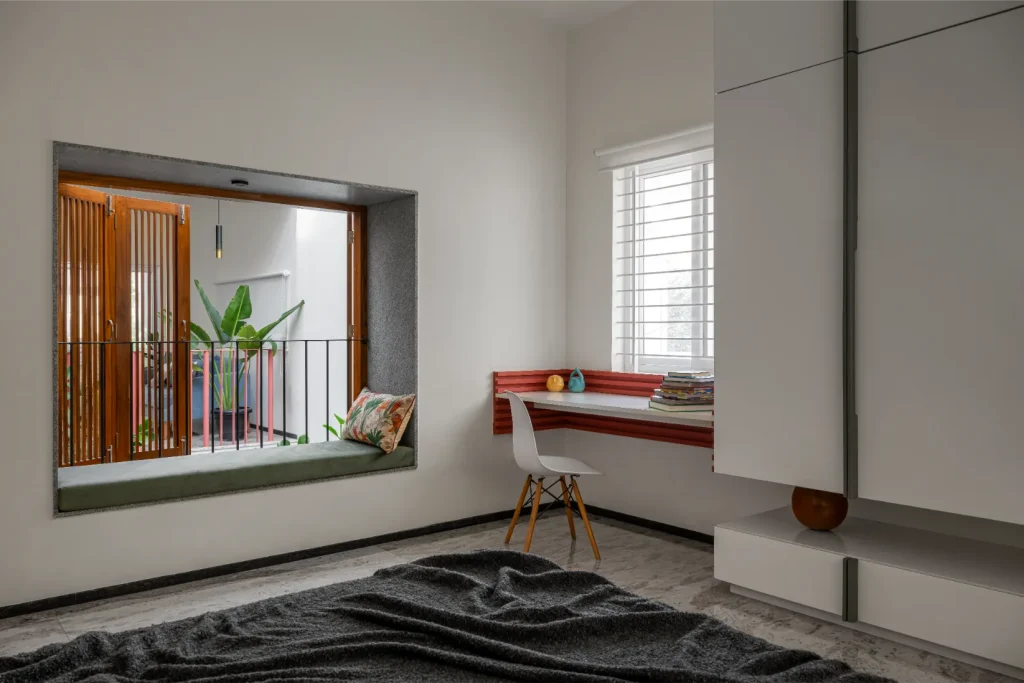
The colour palette is intentionally restrained, allowing light and materials to shape the character of the interiors. 1199-Sail Whiteforms the primary canvas, reflecting natural light entering through the courtyard and creating a sense of openness throughout the house. Its neutrality allows shifting daylight and shadows to animate interior surfaces over the course of the day. To soften this white envelope, NP3627-Pine Zing is introduced selectively within the interiors. The muted tone balances the brightness of the white surfaces while adding warmth and calmness without becoming visually dominant.
Kian Residence
In this project, colours are used as a spatial device, carefully positioned to support the architectural experience rather than dominate it.
The interior palette also continues the material narrative of the exterior, with the stone from the façade extending into parts of the interior to create continuity between outside and inside. In these areas, the use of NP3627-Pine Zing enhances the presence of the stone surfaces, allowing the material to stand out within the spatial composition and emerge as a strong secondary protagonist within the interior narrative.
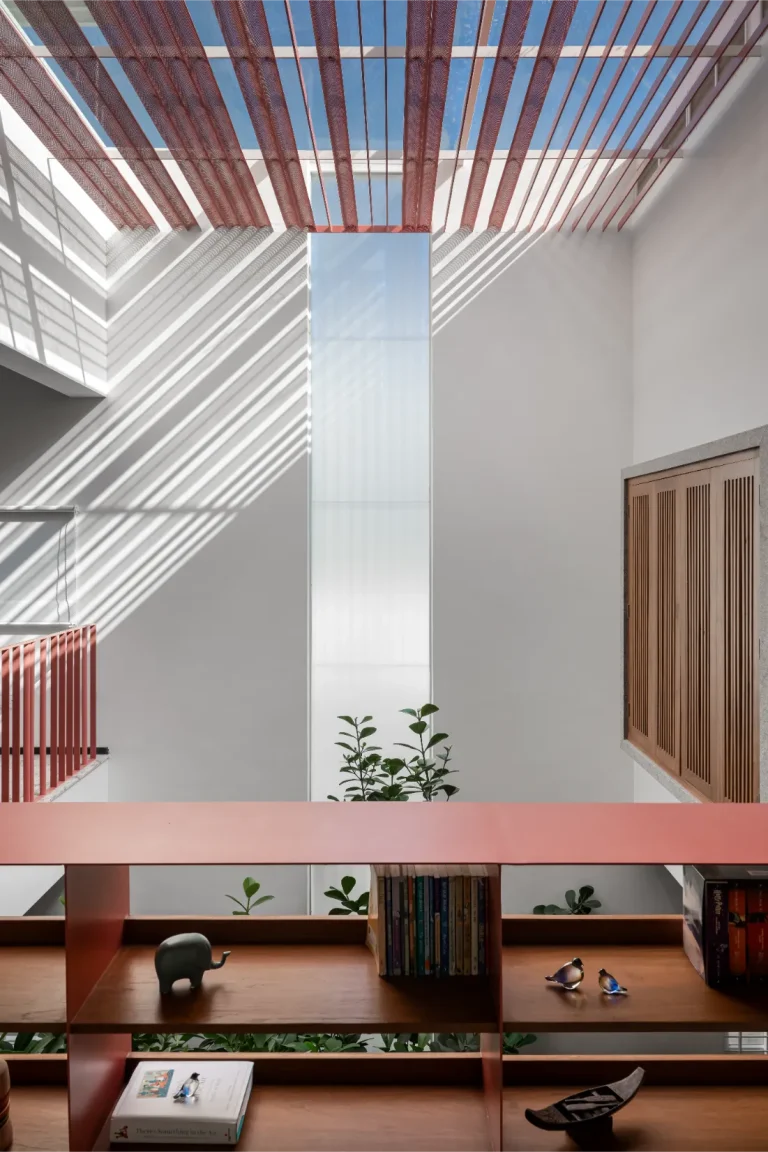
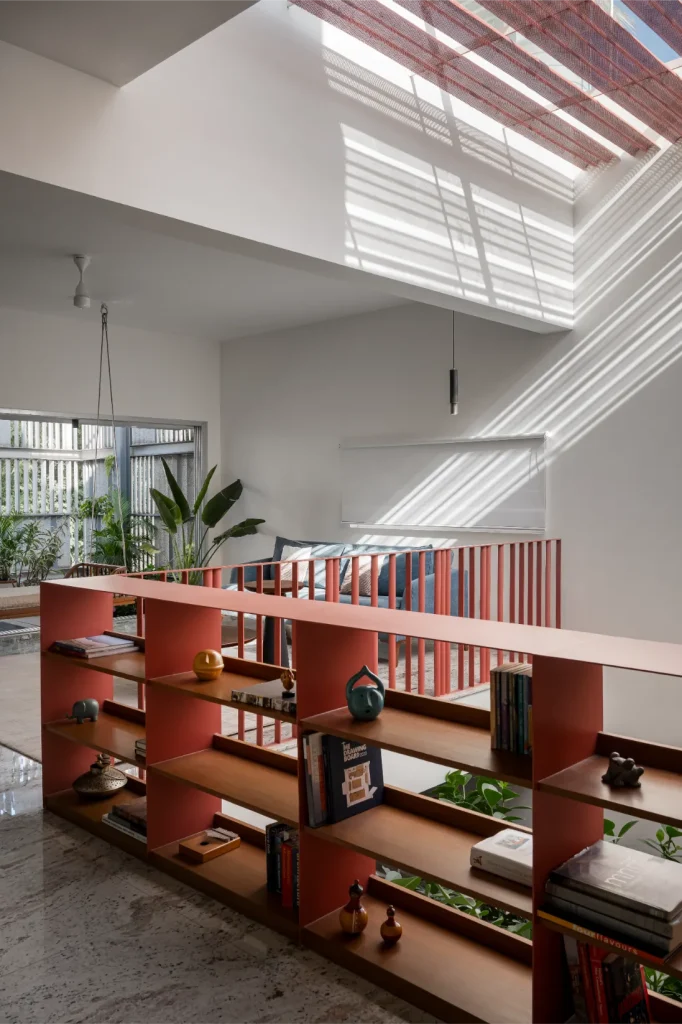
A contrasting accent appears in the staircase through NPR2369A-Watermelon Lolly, applied to the balustrades and shelving elements. Positioned along the courtyard, the staircase connects all levels of the house, and the colour becomes a visual thread highlighting movement across floors. Together, the restrained palette works in harmony with natural materials stone and timber to create a cohesive living environment where colour quietly supports light, movement, and everyday life.
The design balances independence and connection for a multi-generational family.