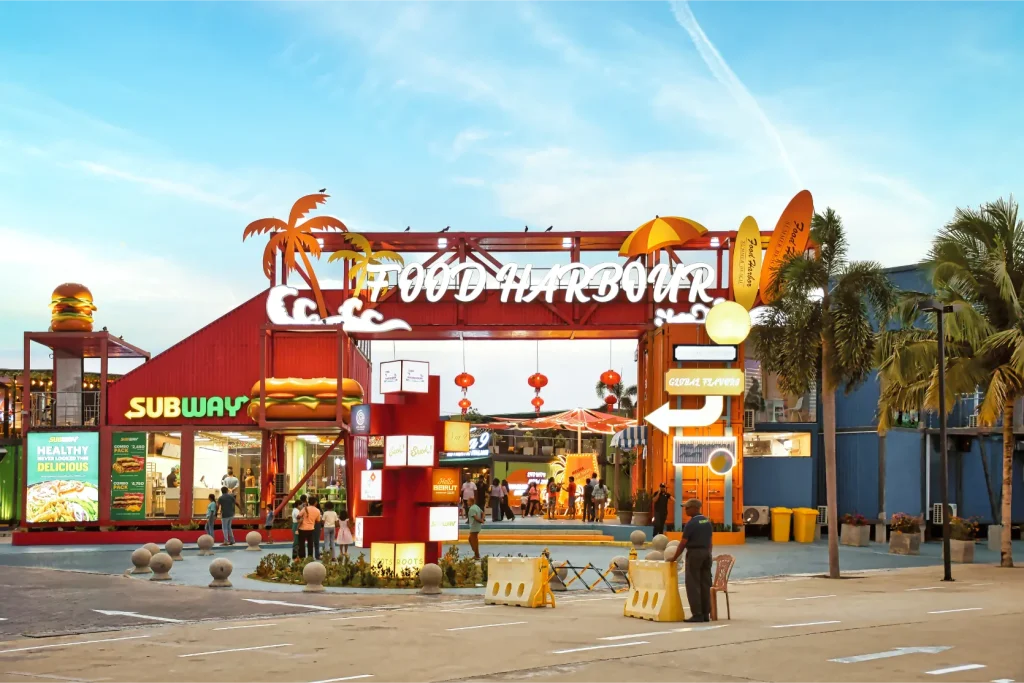
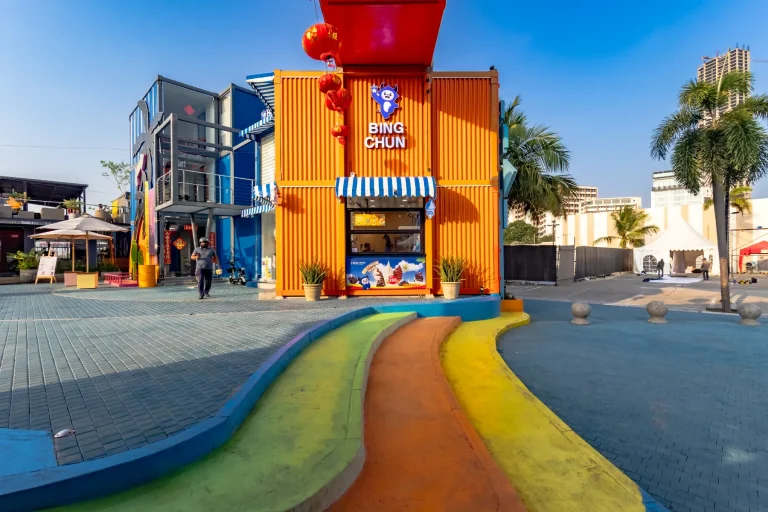
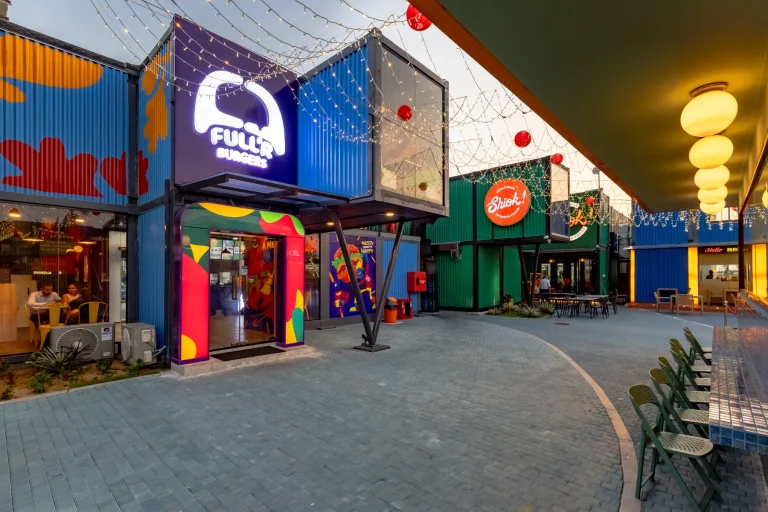
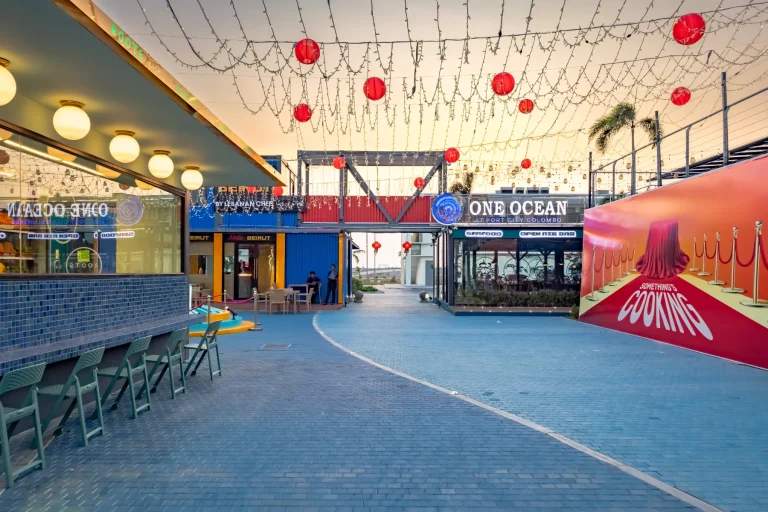
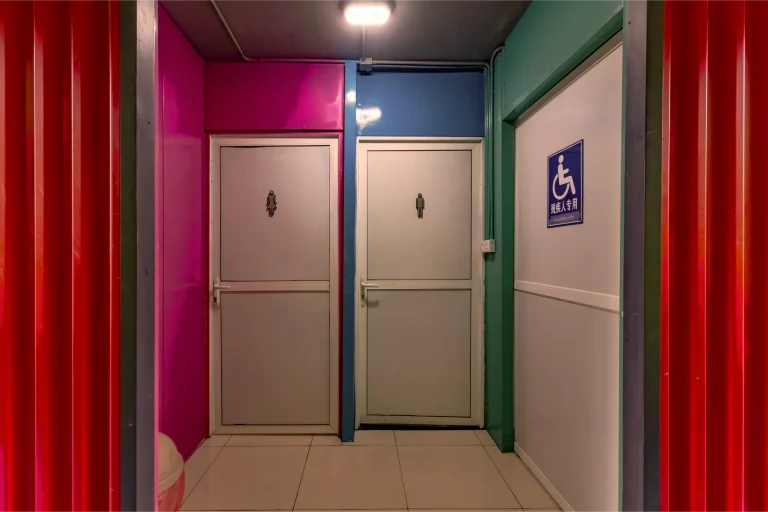
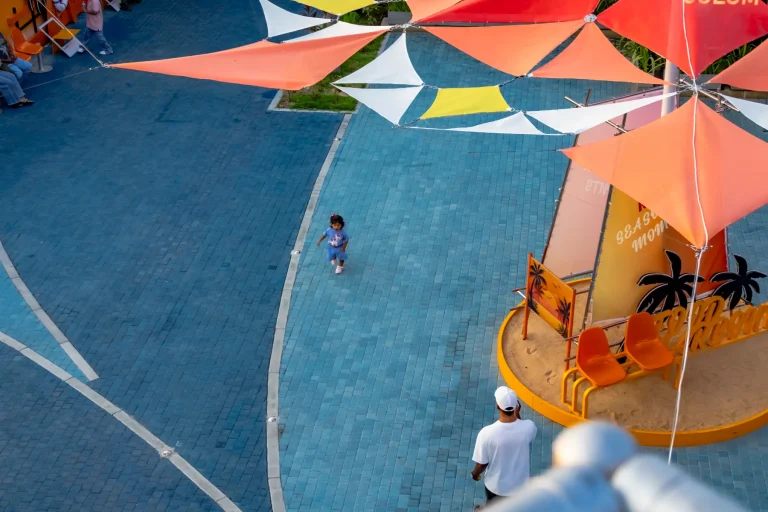
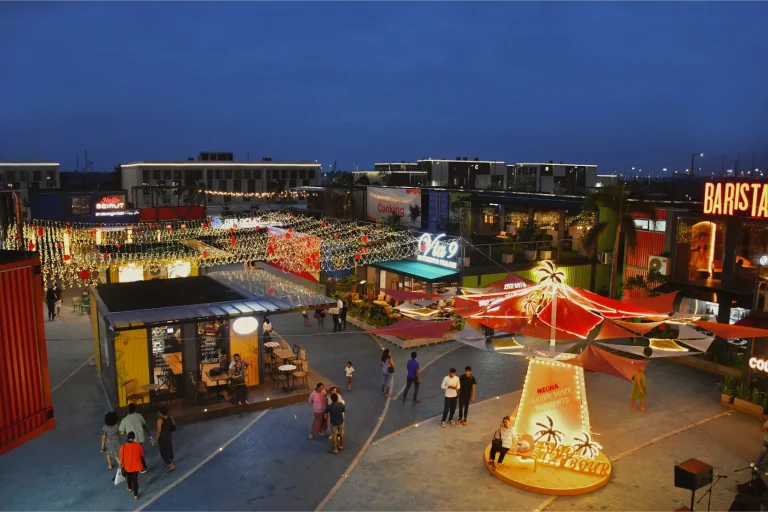
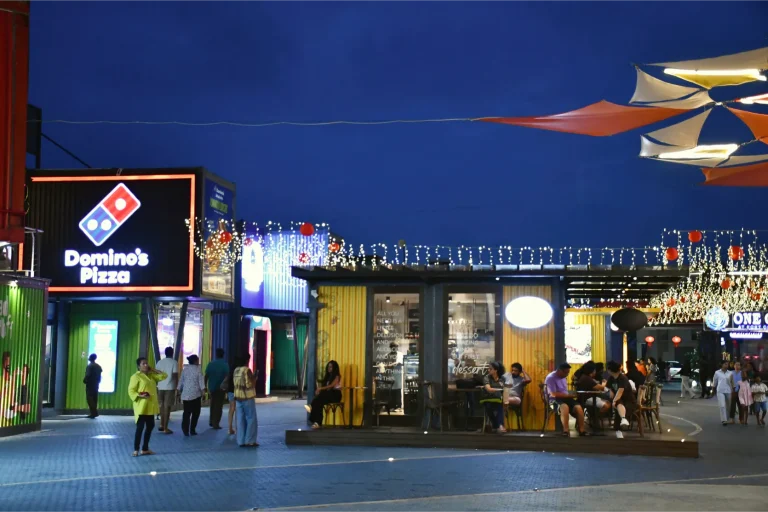
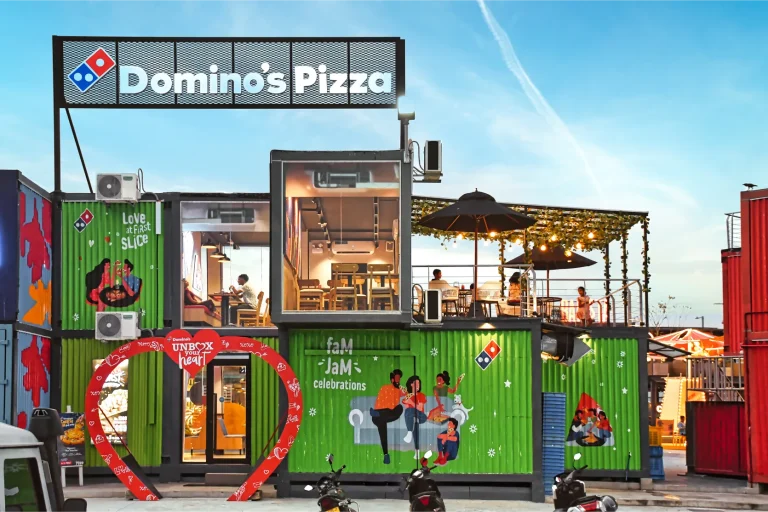
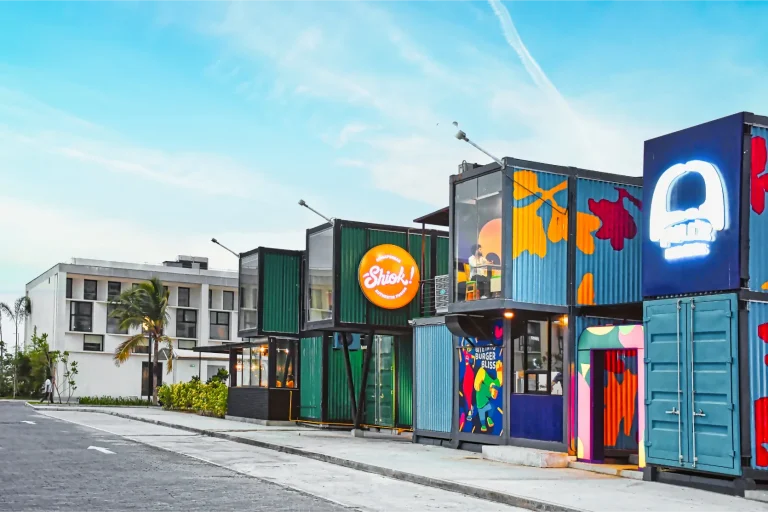
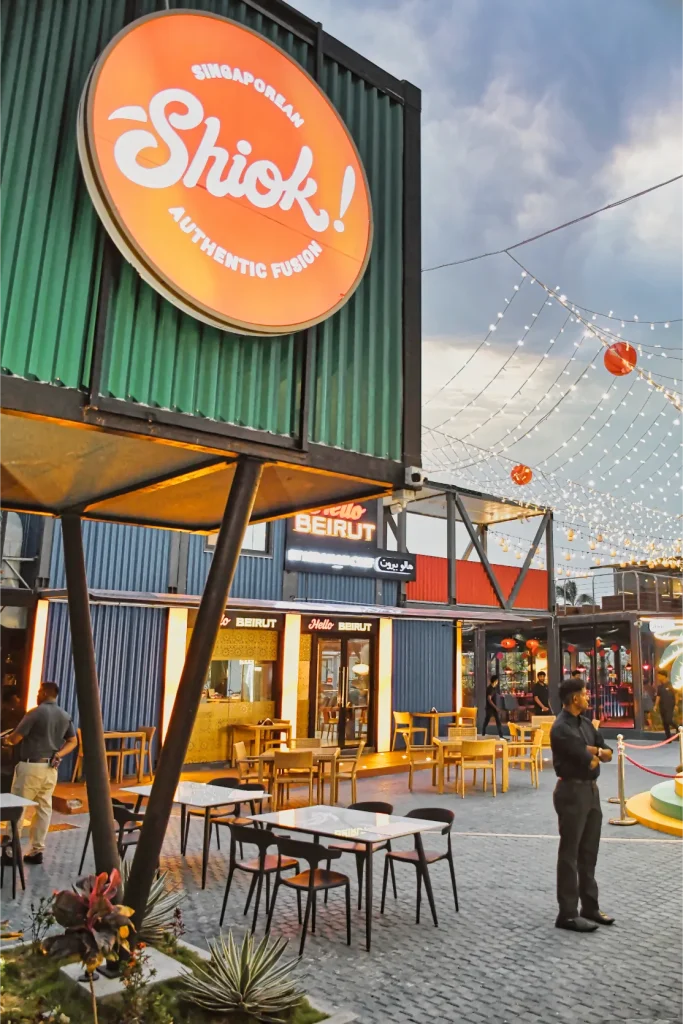
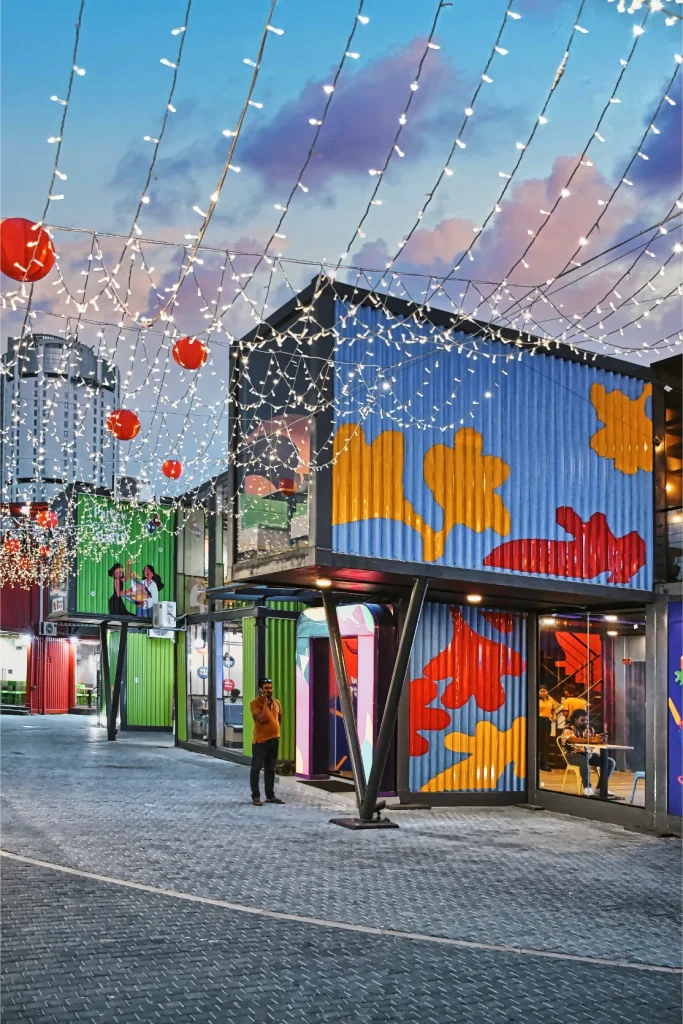
In this project, colour was used to animate the architecture and create a vibrant identity inspired by local fabrics and the urban life of Colombo. The entrance, highlighted in striking red, acts as a strong wayfinder and landmark. Cheerful tones differentiate the food outlets, framed by grey frames. Blue paving patterns, inspired by ocean waves, guide visitors through the courtyard, creating an immersive spatial experience that celebrates culture, movement, and social interaction, making the space a lively public gathering destination.
Background
The Food Harbour is a newly introduced public space at Port City Colombo, representing a vibrant addition to the city’s evolving urban landscape. Designed as more than a conventional food court, it is envisioned as a dynamic destination where food, culture, and community converge within a contemporary architectural setting. With ample parking and easy access, it ensures convenience for a wide range of visitors.
Although the land is allocated for future long-term projects, The Food Harbour is conceived as a temporary installation, lasting five to Fifteen years. Even within this timeframe, it actively attracts the public and helps activate the emerging district, transforming it into a lively social and cultural node. By integrating culinary experiences with open social spaces, it establishes a precedent for the role of public architecture in shaping Colombo’s urban life.
Located in Battaramulla, Sri Lanka
Prabodha Abayawardane Architects
Finalists 2026
Colour Codes
Concept
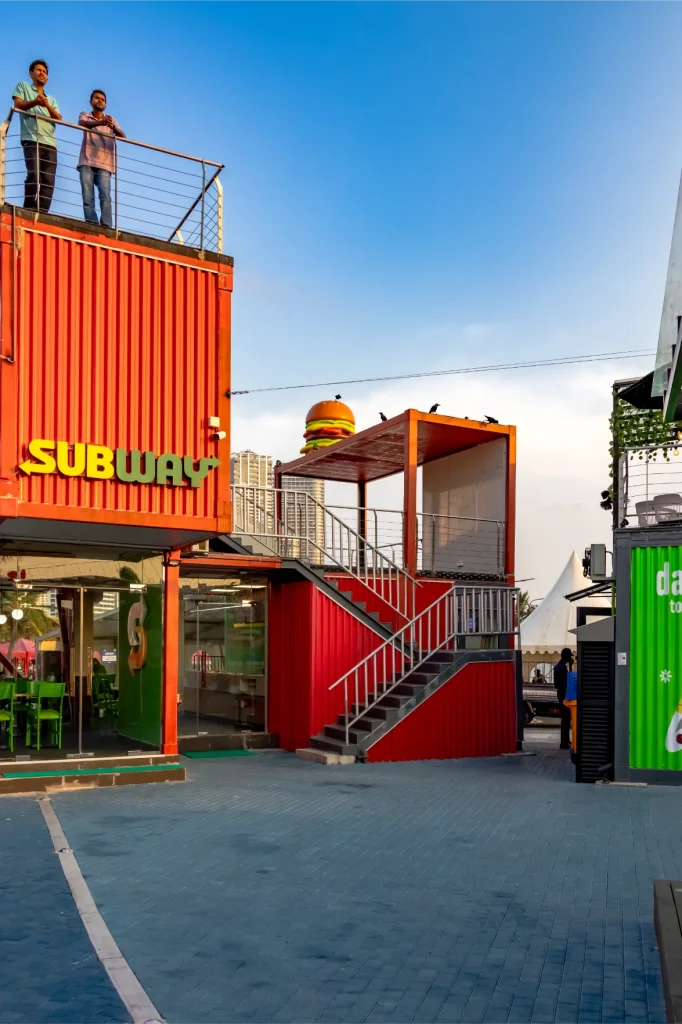
At the heart of the design is an open public courtyard that encourages gathering, interaction, and shared experiences. The spatial arrangement promotes movement, visual connectivity, and inclusivity for diverse user groups. Architecturally, the project employs a composition of stacked cubic forms, generating a bold yet balanced interplay between solid volumes and open voids. A prominent bridge element marks the main entrance and doubles as an elevated observation deck, offering views of Colombo’s skyline and connecting the building to its wider urban context.
The design evolved from an initial marine container concept to a steel modular construction system, enhancing structural performance, durability, and constructability while preserving the original design intent. This modular approach reflects a progressive step in flexible and sustainable construction, demonstrating how innovation and functionality can coexist in urban public architecture.
Colour Story
Colour plays a pivotal role in animating The Food Harbour and reinforcing its vibrant identity. The palette draws inspiration from local fabrics, street culture, and the dynamism of Colombo’s urban life. Striking red highlights the entrance, acting as a key wayfinding element and visual landmark. Cheerful and lively tones differentiate the food outlets, while grey structural frames provide a neutral balance.
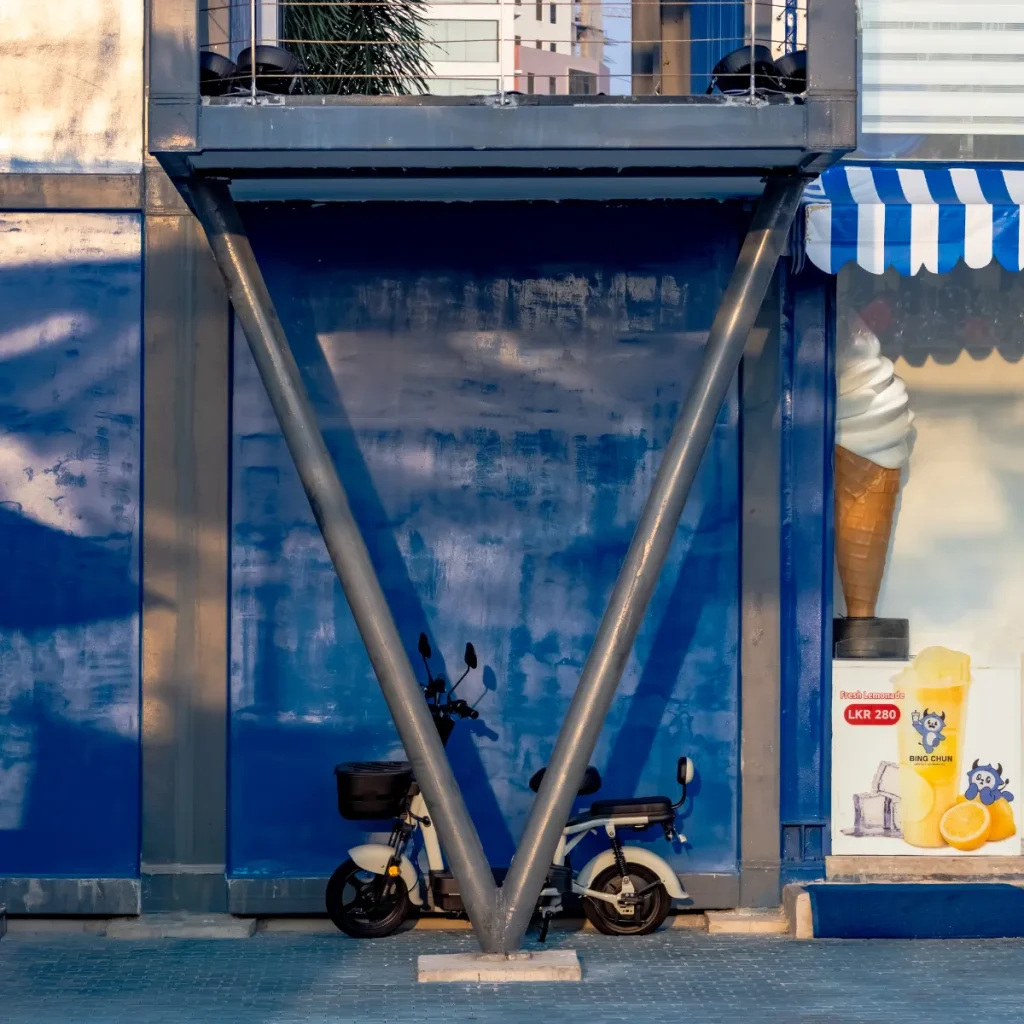
Blue paving patterns, inspired by ocean waves, guide visitors through the courtyard, creating an immersive spatial journey. Together, these colours enhance movement, strengthen visual connectivity, and reinforce the expressive character of the space. The palette also contributes to a playful and inviting atmosphere, making the environment approachable and memorable for all users.
The Food Harbour - Colombo Portcity
In this project, colour was used to animate the architecture and create a vibrant identity inspired by local fabrics and the urban life of Colombo.
Impact
The strategic use of colour transforms The Food Harbour into a lively, engaging, and inclusive urban destination. It enhances wayfinding, strengthens visual identity, and animates social spaces, making the courtyard a dynamic gathering area. Bold, cheerful tones combined with neutral structural elements create a balance between energy and clarity, promoting interaction and emotional engagement.
Functionally, colour helps differentiate activity zones and guides circulation. Spatially and emotionally, it conveys vibrancy, culture, and community, fostering a sense of belonging for both locals and tourists. By combining thoughtful materiality, modular architecture, and a dynamic colour strategy, The Food Harbour exemplifies how temporary public interventions can enrich the urban experience and redefine the role of public space in Colombo.
Colour plays a pivotal role in animating The Food Harbour and reinforcing its vibrant identity. The palette draws inspiration from local fabrics, street culture, and the dynamism of Colombo’s urban life.