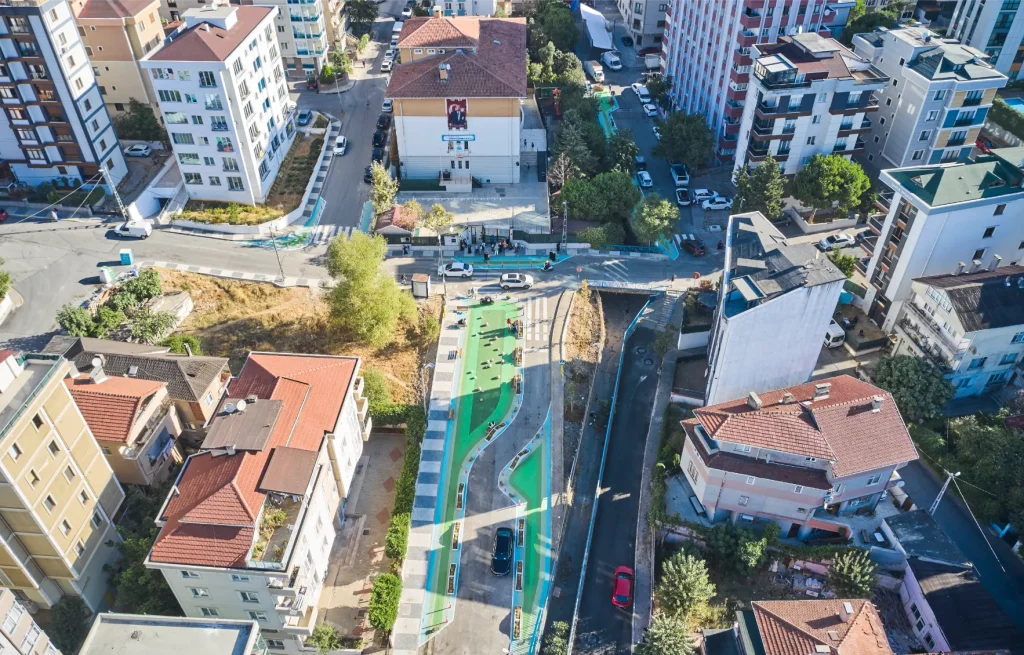
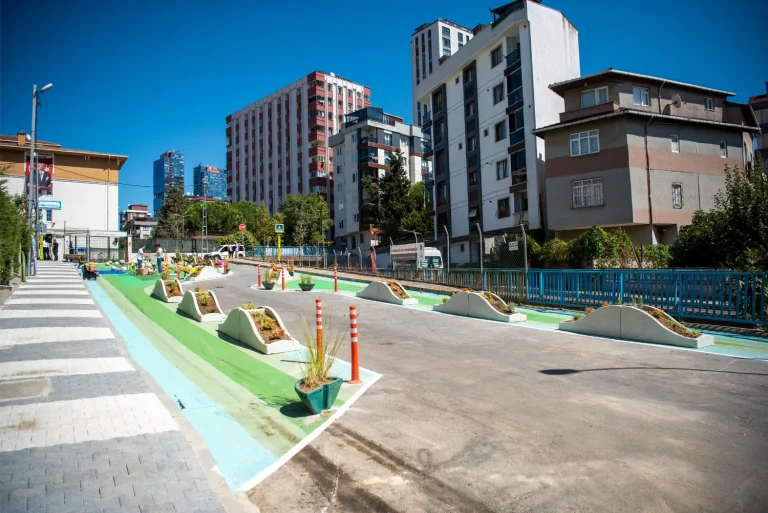
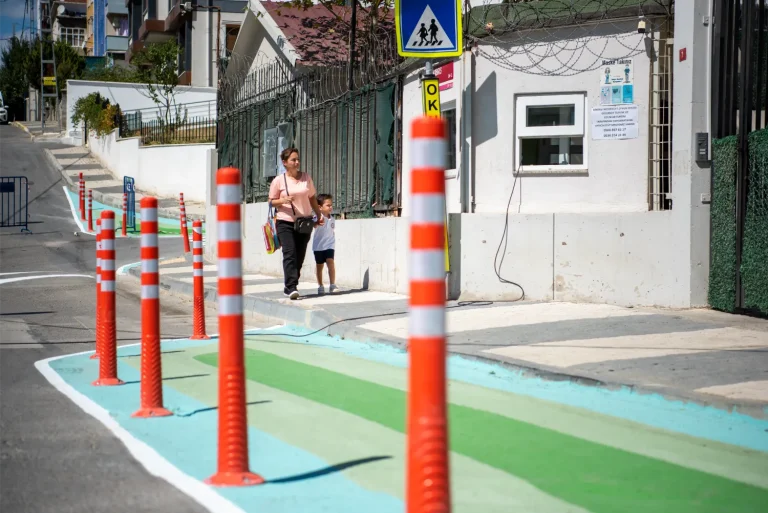
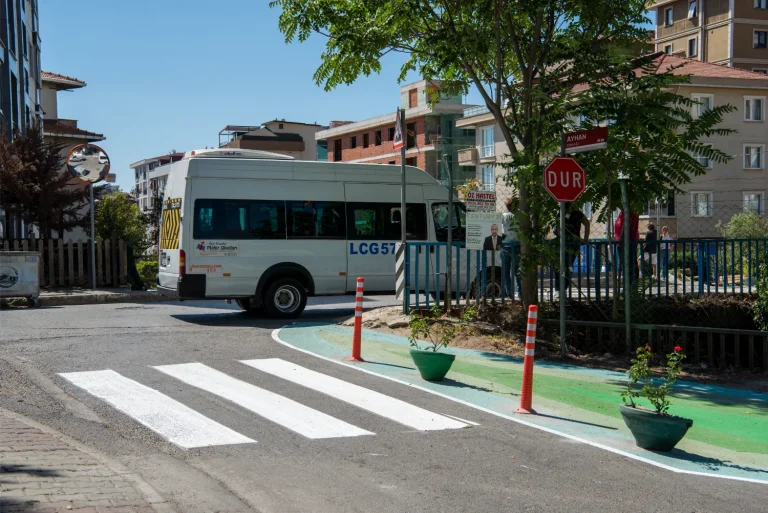
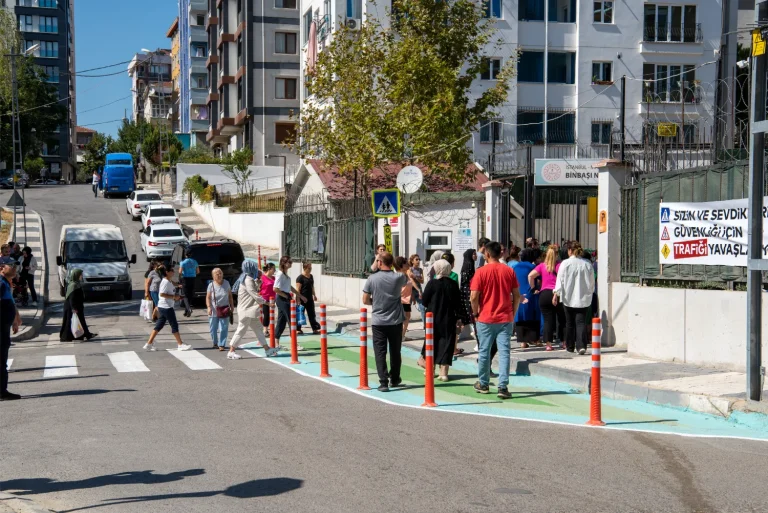
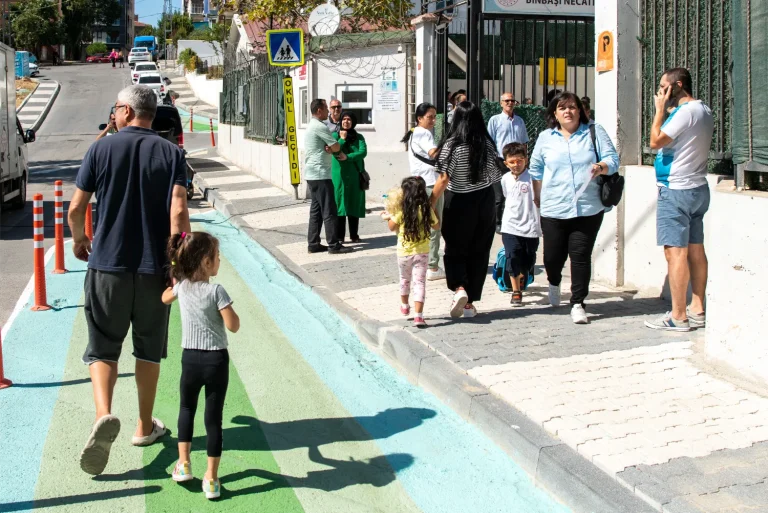
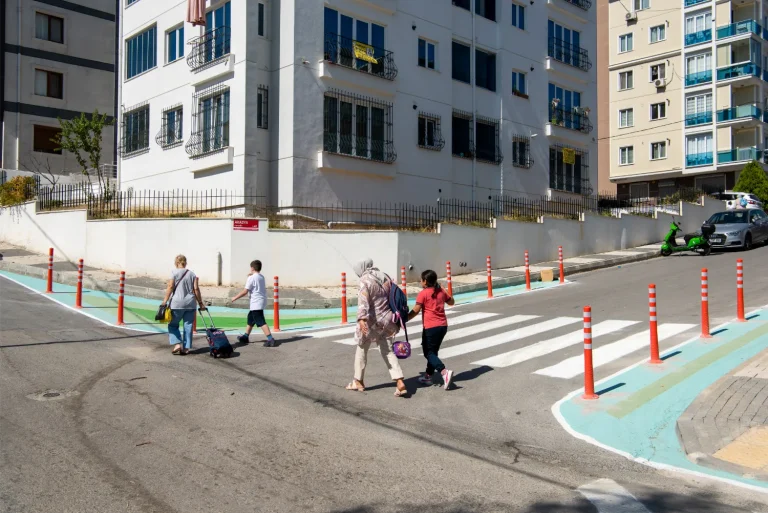
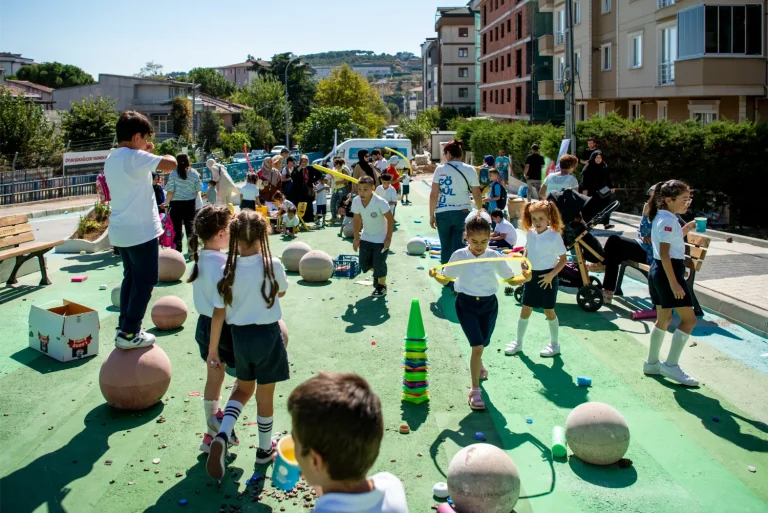
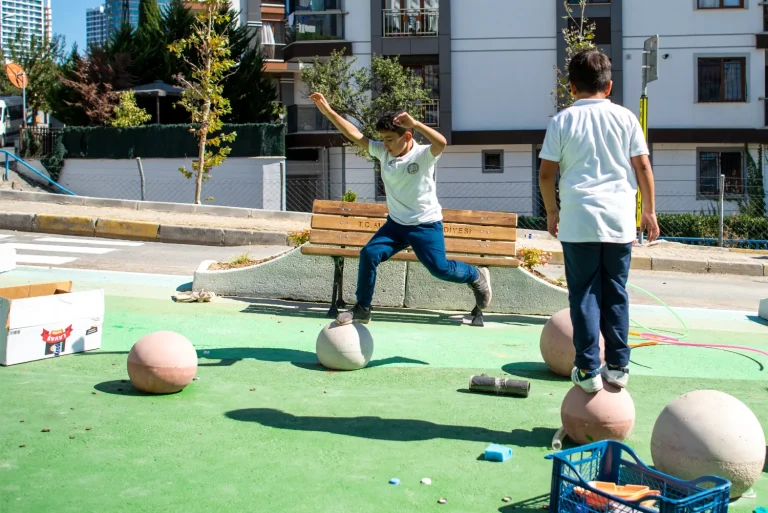
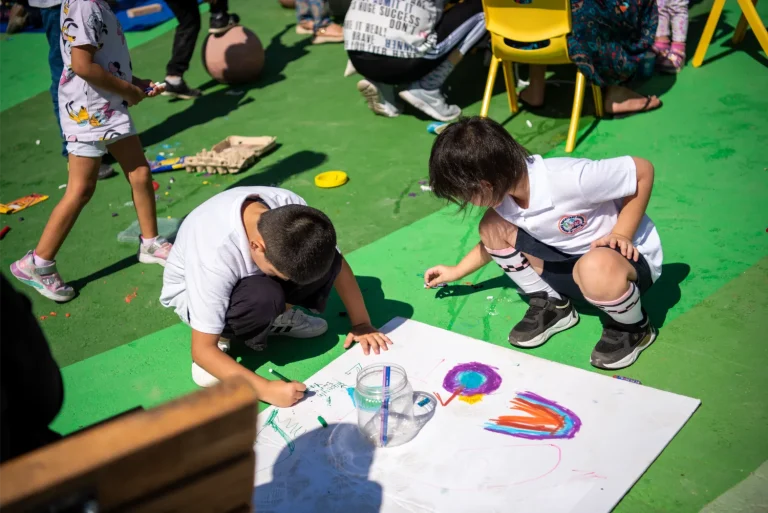
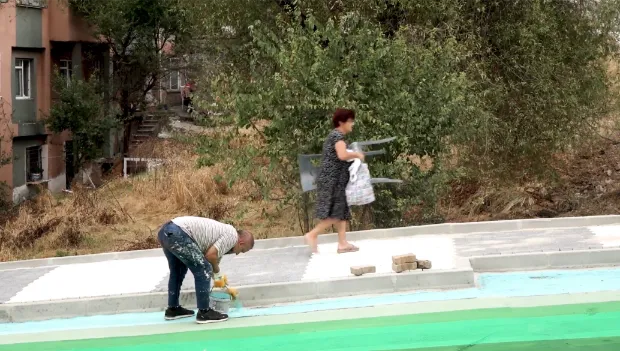
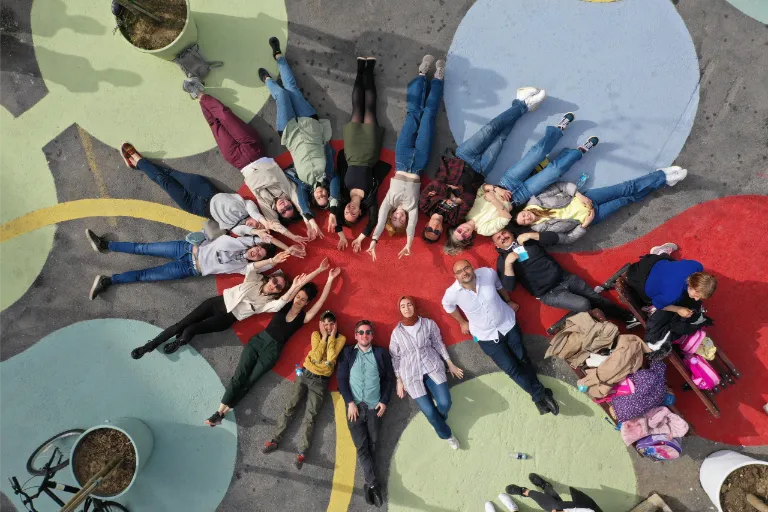
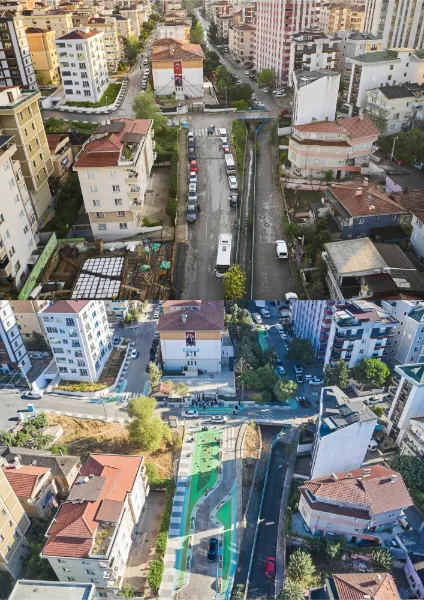
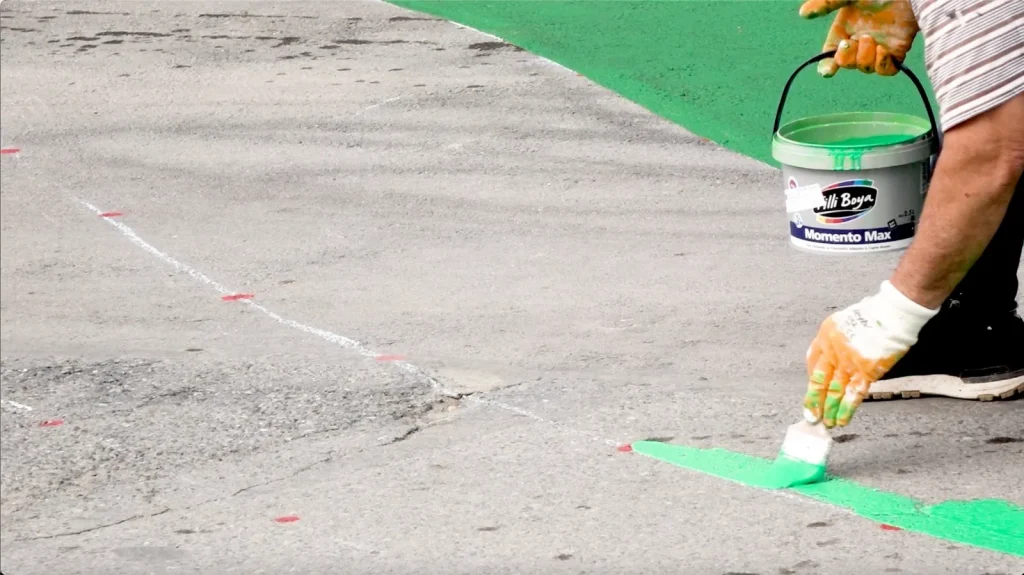
In this project, colour was used to reclaim space for pedestrians, make sidewalk extensions legible, visually slow down traffic, and introduce playful elements into the street environment.
Cevizli School Street is a child-focused street transformation project implemented in 2023 in Maltepe, Istanbul, through the collaboration of Superpool, Maltepe Municipality, and Istanbul Metropolitan Municipality. The project was supported by the Global Designing Cities Initiative (GDCI) under the Streets for Kids program and aims to improve safety, accessibility, and well-being for children and caregivers in school surroundings.
Located in Istanbul, Türkiye
Superpool
Finalists 2026
Colour Codes
The intervention area includes four streets surrounding an elementary school, a kindergarten, and a weekly open-air market. The project directly impacts more than 500 children aged 4–9 and their caregivers. Prior to the intervention, the area was characterized by narrow or discontinuous sidewalks, high vehicle speeds, and insufficient waiting areas during school drop-off and pick-up times. Data collected before implementation showed that 55% of vehicles exceeded the 20 km/h speed limit and that caregivers often waited on the carriageway due to limited pedestrian space.
The project was designed as a rehearsal phase prior to permanent implementation, allowing the neighborhood to experience and evaluate the changes. Interventions were carried out using a low-cost, tactical approach. Sidewalk extensions and space reallocations were primarily defined with ground paint, enabling a visible and quickly deployable transformation. The implementation included sidewalk and curb extensions, a one-way street arrangement, the installation of a chicane, and the creation of a pedestrian-priority plaza and play area on one street.
Cevizli School Street
The project was designed as a rehearsal phase prior to permanent implementation, allowing the neighborhood to experience and evaluate the changes.
In total, 700 m² of space was reclaimed for pedestrians, and 370 m² was allocated for waiting and play activities. Landscaping elements, urban furniture, and physical separators were added to define and protect pedestrian areas.
Post-implementation data shows that the rate of vehicles exceeding the speed limit decreased from 55% to 30%. Pedestrian volumes increased by over 100% on certain streets. The number of children playing in the street increased sevenfold, and caregivers’ presence and social use of the space significantly increased. The project demonstrates that low-cost, data-informed, and iterative street interventions can produce measurable spatial and social impacts prior to permanent investment.
In this project, colour was used to reclaim space for pedestrians, make sidewalk extensions legible, visually slow down traffic, and introduce playful elements into the street environment.